
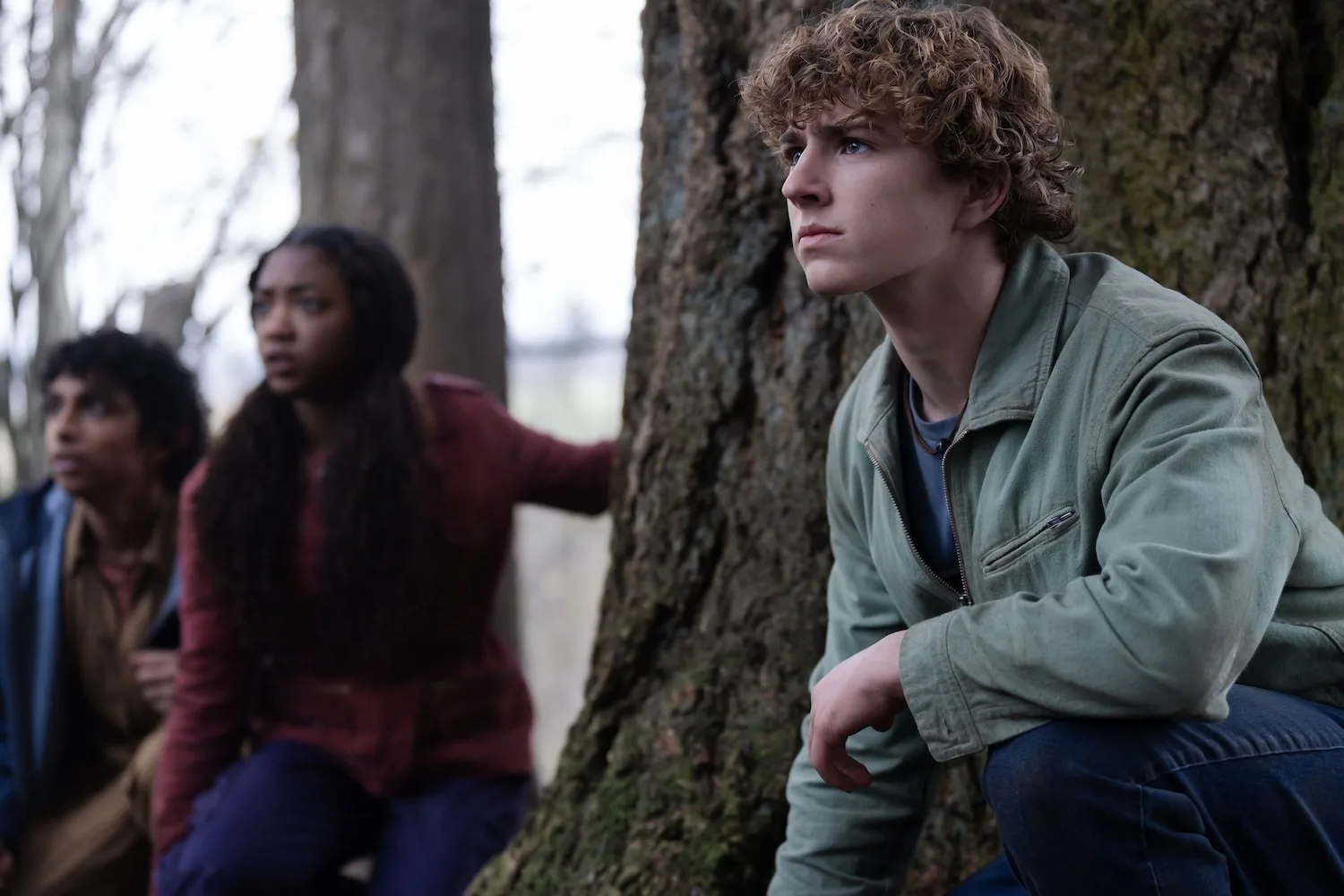
For Jules O’Loughlin and showrunners Dan Schatz and John Steinberg, the primary directive for Percy Jackson and the Olympians is to ensure the world feels grounded. This commitment to realism, creating a world that feels authentic and avoids distracting “tricksy” techniques, led to a significant shift in how Season 2 was filmed compared to the first season. While the Volume technology (large LED screens) was a major component of Season 1, the production team decided to move away from it for major sequences in the second season. In a recent interview with Temple of Geek, O’Loughlin explains that while the technology was wonderful to work with, it didn’t always tick the absolute box of being grounded, leading to questions about whether certain sequences truly felt real.
Prioritizing Real Environments and Natural Light
To achieve a more authentic feel, the production now prioritizes shooting in real environments and building exterior sets. Major sequences are filmed on location whenever possible, such as the semi-arid landscape of the Okanagan in British Columbia, which stood in for Polyphemus’s island. If a suitable location cannot be found, the team builds it as an exterior set to ensure they can shoot under natural light, which O’Loughlin believes is essential to the show’s grounded aesthetic. A prime example of this is the chariot race arena; because a suitable stadium didn’t exist in Vancouver, the production team terraformed a grassy paddock and built a stadium outside to maintain the commitment to natural lighting and real-world physics.
“A big rule for Dan, Jon, and myself was for the world to feel grounded. And the volume is a wonderful, wonderful piece of technology, but it didn’t always tick the absolute box of being grounded. There were times when you looked at things, and you went, ‘Does that really feel real?'”
A Strategic Pivot for LED Technology
The move away from the Volume does not mean the show has abandoned LED technology entirely, but its use has become much more targeted. LED screens are now reserved primarily for “poor man’s process” work. Used mainly for scenes taking place inside cars, buses, or trains. For larger action sequences, the production has evolved its camera craft, moving away from the very controlled camera work of Season 1 toward more immersive techniques. This includes using more handheld cameras and specialty settings, such as reduced shutter angles, to create sharper, more vibrant frames for fast action, similar to the techniques employed in acclaimed war films like Saving Private Ryan or Band of Brothers.
“We moved away from the volume… we use it for what we call poor man’s process, which is being inside cars and buses and trains and things like that. But for the big sequences, we’ve gone out onto location, or we’ve built exterior sets.”
Embracing the Elements
Relying on exterior locations means the production is often at the mercy of nature, especially in Vancouver’s unpredictable climate. O’Loughlin must often act as the one who controls the weather to ensure visual consistency. Using tools like large overhead scrims and “grip clouds”,helium-filled balloons shaped like mattresses that can cut direct sunlight. Despite these challenges, the team finds that embracing real atmospheric conditions adds depth to the story. For the sirens sequence, they leaned into the gray, rainy Vancouver weather. And combined it with visual effects plates filmed in Hawaii to create a stormy, authentic environment that worked for the narrative.

“We are at the whims of nature. And so, you know, the DP has to be the person that controls the weather… I have to have a big enough arsenal of tools to be able to control that light and to make it look like we are still in that same moment of time.”
The Season 2 finale of Percy Jackson and the Olympians premiered on Wednesday, January 21, 2026, on Disney+ and Hulu. All episodes of Season 2 are now available to stream, with Season 3 already confirmed to be coming soon.



![House of the Dragon | Season 3, Episode 2, “Queen’s Landing” Breakdown & Review [Podcast]](https://i0.wp.com/templeofgeek.com/wp-content/uploads/2026/08/house-of-the-dragon-s3-e2_3-jpeg.webp?fit=640%2C321&ssl=1)


![Review: House of The Dragon, Season 3, Episode 1 “Salt and Sea, Fire and Blood” [Podcast]](https://i0.wp.com/templeofgeek.com/wp-content/uploads/2026/06/harry-collett-jpg.webp?fit=640%2C360&ssl=1)


