
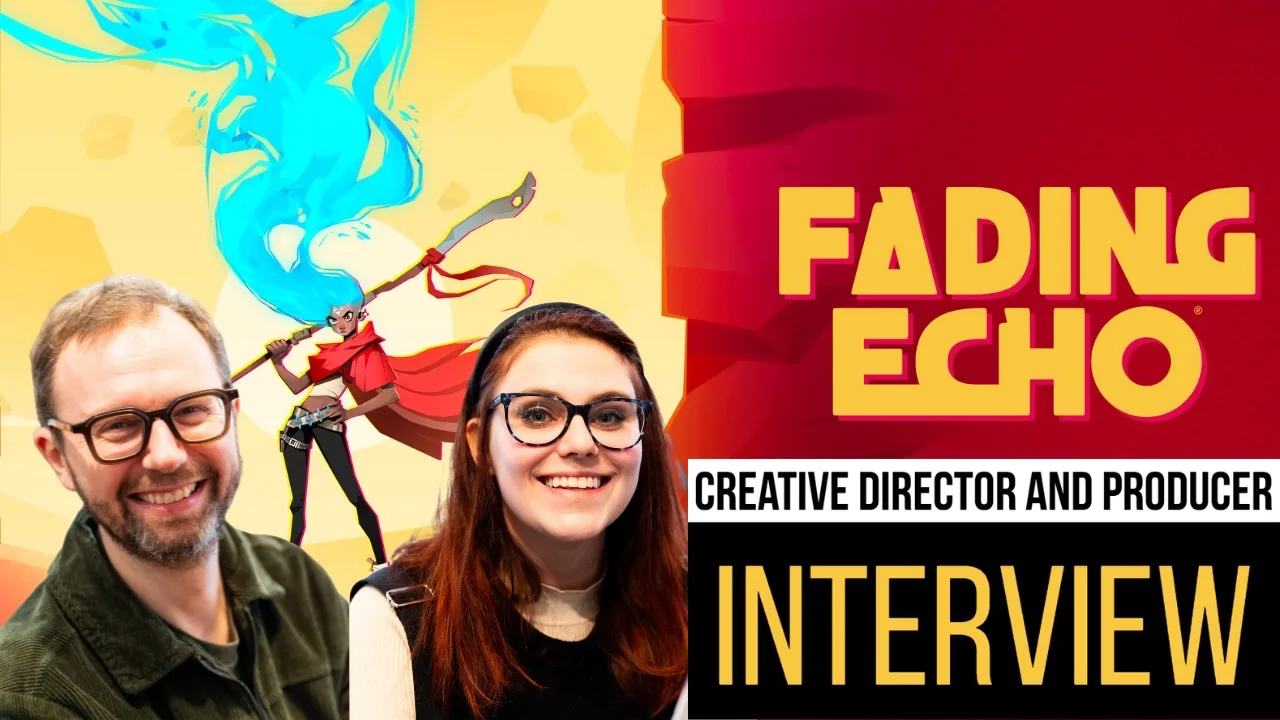
Fading Echo has the kind of pitch that sounds familiar—single-player action RPG, fantasy with a sci-fi edge. This was right up until Elise Marchouba (Senior Producer) and Emmanuel Obert (Co-Founder and Creative Director at New Tales) explained where it truly began: a homebrew tabletop world developed across multiple campaigns long before it was ever a “video game project.”
From Tabletop Roots to a Semi–Open World RPG
That tabletop DNA isn’t just trivia; it shapes how the game wants you to discover it. Elise describes Fading Echo as semi–open world by design, allowing players to choose their direction, pace, and engagement. The result is a story that can unfold differently depending on when you learn key details. This encourages players to form their own conclusions, like a good campaign table does.
Designing Around Intentions
One of the most illuminating parts of the conversation is how the team approaches development. Elise shares that they didn’t start with mechanics—they started with intentions. That seemingly small shift reframes everything: instead of chasing a list of features, the team anchors decisions to what the game should feel like moment-to-moment.
Indie Constraints and Creative Solutions
Indie ambition meets indie reality quickly, and the team doesn’t shy away from it. Elise discusses the challenge of showing alternate realities without “making the game four times,” and how constraints forced smarter pipelines and sharper creative decisions—sometimes down to hard math on production time per asset.
If you’re curious how a tabletop-born universe becomes a stylish, systems-driven action RPG—and what it actually takes to build that “be like water” design philosophy on an indie budget—the full interview is absolutely worth your time. Enjoy the full interview, and if the game clicks with you, try the demo and wishlist Fading Echo on Steam.
Fading Echo demo is out now and launching sometime in 2026
Be sure to join our Discord for discussions about video games and more at Temple of Geek!


