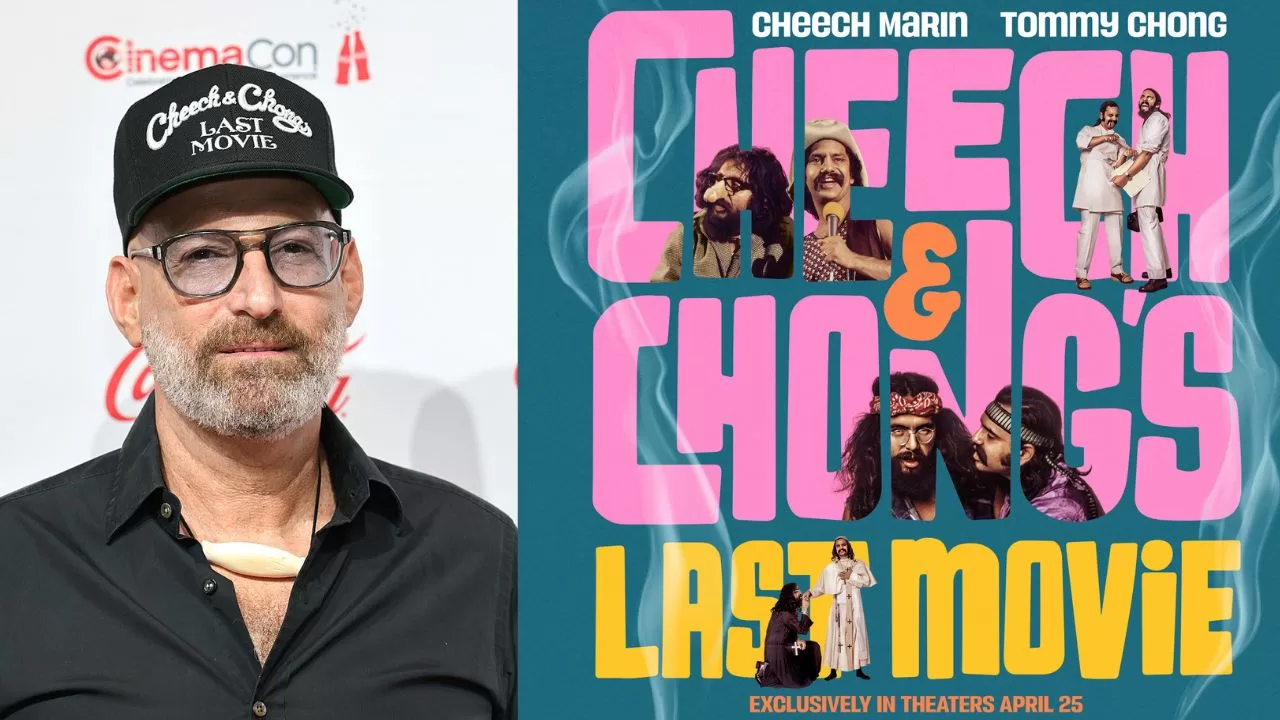
In an interview with Monica from Temple of Geek, Director David Bushell discussed his new film, “Cheech & Chong’s Last Movie,” a documentary that defies traditional expectations by blending animation, archival footage, and a cinematic road trip to tell the story of Cheech Marin and Tommy Chong. The film debuted at SXSW last year, had a theatrical release in April, and is now available on video on demand.
The Genesis of the Documentary
Bushell revealed that the journey to create the documentary spanned many years. The initial spark came from the realization that no one had ever made a documentary about the iconic duo. While an earlier attempt at a reunion film didn’t pan out, the idea naturally evolved into the documentary format. As his directorial debut, Bushell aimed for a theatrically worthy film that avoided common documentary pitfalls like over-reliance on convention, contrivance, or a simple interview-and-clip structure.
Q: What was the initial spark that led you to pursue this documentary, and how long has this journey been for you?
A: The journey has been years and years long. One major spark was that no one had done a documentary on Cheech & Chong before, making it a “no-brainer”. Originally, I was called to produce a Cheech & Chong reunion film, which didn’t happen after Tommy went to prison. This naturally grew into the documentary. As my directorial debut, I wanted to create something theatrically worthy that avoided common documentary pitfalls, such as relying too much on convention, contrivance, exposition, or just straight interviews cut to clips.

Blending Creative Elements
Q: You really enjoyed the inclusion of animation, stand-up bits, and the narration by Cheech & Chong themselves. What conversations did you have around blending these elements to create a more engaging narrative versus traditional documentary narratives?
A: I “followed my nose a bit”. I knew I didn’t want to fall into convention, but certain conventional elements, like archival footage and interviews, were necessary. We started by acquiring archival footage and then laying down their story through about 30 hours of individual interviews. I also read their books. I always felt like I was “fighting for something more”. Since people had been waiting for a Cheech & Chong movie for years, I thought it would be great to thread a 15 or 20-minute Cheech & Chong movie throughout the documentary to give it scope and open it up, while also learning about their journey.
Striking Differences and Similarities
Q: Going through the archival footage and creating new content with them now, what were the most striking differences and similarities you found?
A: As Cheech says, he knows where he is by his hairline in the movie. The guys are obviously older now, more like elder statesmen, though they can still be their characters, Pedro and Man. I didn’t want to pretend they were still from the 1970s or 1980s. In terms of their comedic timing and nature, they’re family. Cheech reminded me early on, “we’re not friends, we’re brothers”. I’m happy they entrusted me with telling their legacy.
The Impact of Authorization
The documentary being fully authorized was crucial for Bushell. He stated he wouldn’t make a film about someone without full authorization to ensure access to the truth and a first-person account. He felt “spoiled” by their willingness to be open, with “nothing being off limits”.
Q: This is the first-ever fully authorized documentary on them. What challenges and opportunities did that authorization present in terms of access, storytelling, and the overall narrative?
A: Having final cut on the film was important, and it’s gratifying that they both love the film. Having access was crucial; I wouldn’t make a film about someone if it wasn’t fully authorized, as it wouldn’t be a first-person account and might not get to the truth. The fact that the guys were “game” and “nothing being off limits” spoke volumes. I feel “spoiled” by this access, as I wouldn’t take on a film about someone unless they were interested.

Parallels with Past Work
Bushell also discussed parallels with his work on “Jim Carrey I Needed Color,” noting that while the subjects are different, both projects involved seeking the essence of the story and remaining true to it.
Q: You also worked with Jim Carrey on “Jim Carrey I Needed Color.” Did you find any parallels or unique insights between that storytelling and Cheech & Chong’s?
A: No, they’re different people. I met Jim on Eternal Sunshine of the Spotless Mind and we’ve been good friends since. I was around during the early stages of his painting career. Working on his six-minute film was almost like “push-ups” for this two-hour documentary. There weren’t real parallels, except for always looking for the essence of the story and trying to remain true to it.
The Desert Road Trip Framing Device
The film’s framing device, a desert road trip, was a “golden ticket” that gave the documentary scope and theatrical worthiness. This intimate setting, with guests “popping in and out” of the backseat, allowed for a mix of humor, honesty, and tension.
Q: The film uses the Desert Road Trip as the framing device. How did this concept come about? What conversations did you have around placing them in such an intimate setting, and including the people popping in and out of the backseat?
A: The desert road trip was “the golden ticket”. The challenge was the cost and the risk of it not working, as it’s much more expensive than a studio interview. I wanted to open up the film and give it scope, making it theatrically worthy, while finding a device that wasn’t too contrived. It felt familiar because we’ve seen them in that two-shot, and people had been waiting for that. The idea just became obvious, and then we figured out what to talk about and who to bring on the journey. Having the archival footage and portrait interviews helped in deciding which segments to animate (like their first meeting) and what could be funny, honest, or create tension in the desert.

Cheech & Chong’s Enduring Relevance
Regarding Cheech & Chong’s enduring relevance, Bushell attributed it to their courage in portraying things “everybody was doing but nobody was talking about”. He explained that they tapped into drug culture because people responded to it, effectively “stealing home plate” while other comedians shied away. Bushell highlighted the irony of cannabis being mainstream today, given that Cheech & Chong were once considered “dope smoking hippies” who couldn’t even get on TV. He also praised their continued success, mentioning Cheech’s art museum and Tommy’s work in the cannabis space.
Q: Cheech & Chong exploded onto the scene with their unique blend of humor. How do you think they managed to ignite imaginations globally and maintain their relevance for over 50 years?
A: They were talking about and portraying things that “everybody was doing but nobody was talking about”. Their “guts” in doing so is probably what made and continues to make them relevant. They weren’t trying to be provocative; it was more like “man on the street, this is what’s going on”. Cheech says they tried various things, and people responded to drug culture, so they focused on that, essentially “stealing home plate”. Other comedians saw it as low-hanging fruit, but Cheech & Chong related to what people were doing while everyone else was hiding it. It’s ironic that cannabis is now mainstream, given they were considered “dope smoking hippies” and couldn’t even get on TV. Their story remains prescient.
Q: The odds were completely stacked against them, yet they were successful. What are your thoughts on that?
A: Even within the industry, people tried to compare them, but as Tommy says in the film, “we’re something else,” and they truly are. If they only had a stand-up and record career, it would still be tremendous, but they also made many movies. Fifty years later, we’re still talking about them. Cheech just had “Cheech Maranday” on June 20th in Los Angeles, and they have a thriving cannabis company. Cheech has his art museum, and Tommy is very active in the cannabis space. They’ve been going for a long time.
Embracing Conflict for Truth
ushell intentionally included different interpretations of events and unresolved conflicts to present the truth. He views the film as a love story, and conflict is a natural part of any 50-year union. The film’s narrative intentionally concludes with their breakup to address audience questions about why they stopped. He believes that these elements make the story empathetic and relatable, reflecting universal experiences in relationships.
Q: The film doesn’t shy away from different interpretations of events and some unresolved conflicts. Why was it important to include these honest insights and subjective viewpoints rather than presenting a more harmonized narrative?
A: Because it’s the truth. It acts as a “third act engine” and makes the film empathetic, allowing viewers to relate to it. The film is a love story about these two guys, and any 50-year union will have conflict. The story, with the exception of the epilogue, ends with their breakup because people often wonder why they stopped. I wanted to tell the story from the origins of the act to their breakup (roughly 1969 to the mid-80s), with some context about their origin beforehand. The conflict is a part of their story. It’s empathetic, with the “yin-yang aspect,” and the “older brother younger brother aspect”. Hopefully, viewers will see themselves in these relationships, relating to disagreements about memories or past events, which keeps it human.
Maximizing Time and Impact
To maximize his time during the extensive interviews, Bushell emphasized preparation, knowing what he wanted while remaining flexible for “magic to appear”. He views it as having a “safety net” but hoping not to use it, allowing for unexpected moments to emerge.
Q: With the limited time you had, how did you maximize your time to capture authentically and get those intimate moments?
A: It comes down to preparation. It’s about knowing what you want but also being flexible for “the magic to appear”. I see it as having a “railing or safety net” that you hopefully won’t need to use. Preparation involves knowing what movie you want to make at each stage – from having archival footage and reading their books before the portrait interviews, to knowing what you need for the desert shoot after all that. The goal is to get what you wanted, and then hopefully, “magic appears on top of that”.
Q: When audiences watch this film, what do you hope they take away from it?
A: I hope they take away that Cheech & Chong are “so much more than the characters they portray” and that we have a tremendous amount to learn from them. And, I hope the audience laughs too.
Ultimately, Bushell hopes that audiences will take away that Cheech & Chong are “so much more than the characters they portray,” that there is a “tremendous amount to learn from them,” and that the film makes them laugh.
The film is now available on video on demand!