
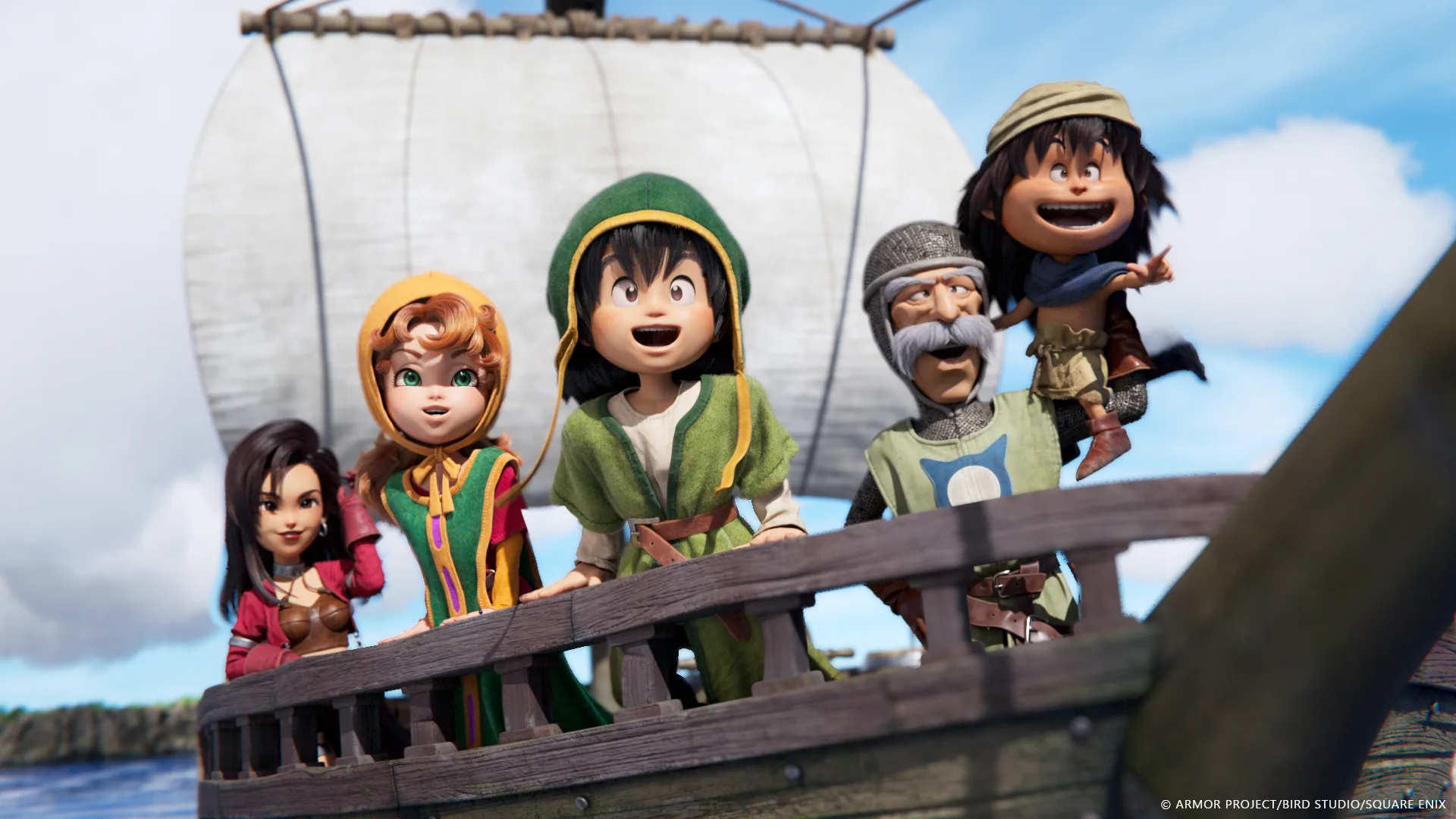
Reviewing a “Reimagined” version of a game as beloved and specific as Dragon Quest VII is a strange exercise, because at its core, this is still the same slow-burn adventure many fans remember. The bigger question is what happens when you take a famously deliberate JRPG and modernize the friction points without sanding off the charm.
After spending time with Dragon Quest VII Reimagined, I came away thinking this is less about reinventing Dragon Quest VII and more about finally letting it meet you where you are. The result is a welcoming entry point that celebrates the genre’s foundations: clear goals, cozy rhythms, and that uniquely Dragon Quest blend of sincerity and storybook wonder.

A Reimagining That Respects the Original Tempo
The headline changes are exactly what you’d want from a “classic brought forward” remaster/remake hybrid: a refreshed presentation (with a diorama-like style), quality-of-life updates, and a narrative structure that’s been streamlined to be more accessible — and that last part matters. Dragon Quest VII has always been a journey defined by patience, by small mysteries that stack into bigger ones, and by the slow satisfaction of restoring the world piece by piece. In Reimagined, the game still wants you to live in its pacing, but it’s noticeably better at keeping you oriented and engaged while you do. If you’ve ever been curious about DQ7 but bounced off older versions because of its age, friction, or sheer commitment, this version feels purpose-built to finally say: come on in.

The Comfort of “Classic,” and Why That’s a Strength
Here’s the thing I kept coming back to: Dragon Quest VII Reimagined is “classic” in a way that feels almost radical in 2026. A lot of modern JRPGs can become intimidating fast, with layered systems, sprawling menus, and a dozen sub-mechanics competing for your attention. There’s a time and place for that (and I enjoy plenty of those games), but sometimes you want a JRPG that simply asks you to go on an adventure, fight fantastical battles, upgrade your party, and see what’s over the next hill.
That’s where this game lands for me. It reminds me of the appeal of Pokémon at its best: approachable on the surface, charming in tone, and confident enough to be straightforward. “Simple” doesn’t automatically mean “shallow.” It can also mean readable, friendly, and easy to recommend to someone who’s trying to understand why people love JRPGs in the first place. And Dragon Quest has always been one of the genre’s best comfort-food series. Even when the stakes rise, the series’ DNA is still about warmth: earnest heroes, playful monsters, and a world that wants you to settle in for a while.

A World You Can Just Exist In
One of the most underrated strengths of DQ7 is that it isn’t in a rush. Even when the plot pivots into high fantasy, the experience is built around living inside the world: talking to people, poking around towns, and letting the game’s episodic structure carry you across different places and eras. Reimagined keeps that feeling intact, and the updated presentation amplifies it. The diorama-inspired look gives the world a storybook texture that feels like a natural match for the series’ tone.
And yes, the game can feel easy at times. But I’m not convinced that’s a flaw for everyone, or even most players. There’s value in a JRPG that can be steady and inviting, where “progress” doesn’t always have to mean “stress.” For a lot of players, the reward is the journey itself: the sense of scale, the accumulation of little stories, and the comfort of a reliable rhythm.

Modern Touches That Reduce Friction, Without Losing Identity
Reimagined includes meaningful battle and pacing improvements: battle speed adjustments, auto-battle options, and other tweaks meant to keep the flow moving. These aren’t flashy features, but they’re exactly the kind of practical modernization that changes how a long JRPG feels to play in the moment. When a game is asking for dozens of hours, little conveniences stack up into a much smoother experience. The key is that it still plays like Dragon Quest. It’s not trying to become the latest trend — it’s trying to become the best version of itself.
What Works, and What Might Not
What works best about Dragon Quest VII Reimagined is how confidently it invites you in. The modernized pacing and refreshed presentation make a long, classic JRPG feel approachable without stripping away its identity. Its “classic” structure is a strength, too: the systems are clear, the tone is charming, and the experience feels cozy rather than exhausting. Most of all, it succeeds at letting you simply exist in its world. The scale, the steady rhythm, and the accumulation of small stories create a sense of comfort that makes the journey feel rewarding even when the challenge stays light.
What might not work for everyone is that this is still Dragon Quest VII at its core, and it doesn’t pretend otherwise. If you were hoping for a bold reinvention that dramatically reshapes the original, the foundations remain familiar and deliberately paced. And while this can be a positive for many, players who crave constant difficulty spikes or high-pressure combat may find the experience too gentle, especially with convenience options that smooth out friction. Finally, if slow-burn storytelling and gradual progression aren’t your thing, the game still asks for patience, even in its more streamlined form.
So Who Is This For?
If you’ve never played Dragon Quest VII, this is the version I’d point to first. The streamlined narrative and updated mechanics make it easier to access without asking you to push through dated edges and the visual upgrades are a welcome treat. If you love the original, this depends on what you want. If you’re looking for a completely re-authored experience, this isn’t that. But if what you want is the same adventure with a smoother feel and a more modern presentation, this delivers on the promise of “Reimagined.” If you’ve been burned out by overcomplicated JRPG systems, DQ7 Reimagined is a reminder that clarity can be refreshing, and that a game can be satisfying without drowning you in complexity.

Verdict
The best compliment I can give Dragon Quest VII Reimagined is that it made me want to celebrate “classic” again. Not because it lacks ambition, but because it understands the value of being approachable, endearing, and clear about what it is. In a genre that can sometimes feel like it’s competing to be the most complex thing in your backlog, Dragon Quest 7 Reimagined feels like an open door: come explore, come breathe, and come spend time in a world that’s happy to have you.
Kurosh’s Verdict: 9/10
Reviewed code provided by the publisher. Reviewed on PC.
Be sure to join our Discord for discussions about video games and more at Temple of Geek!


