
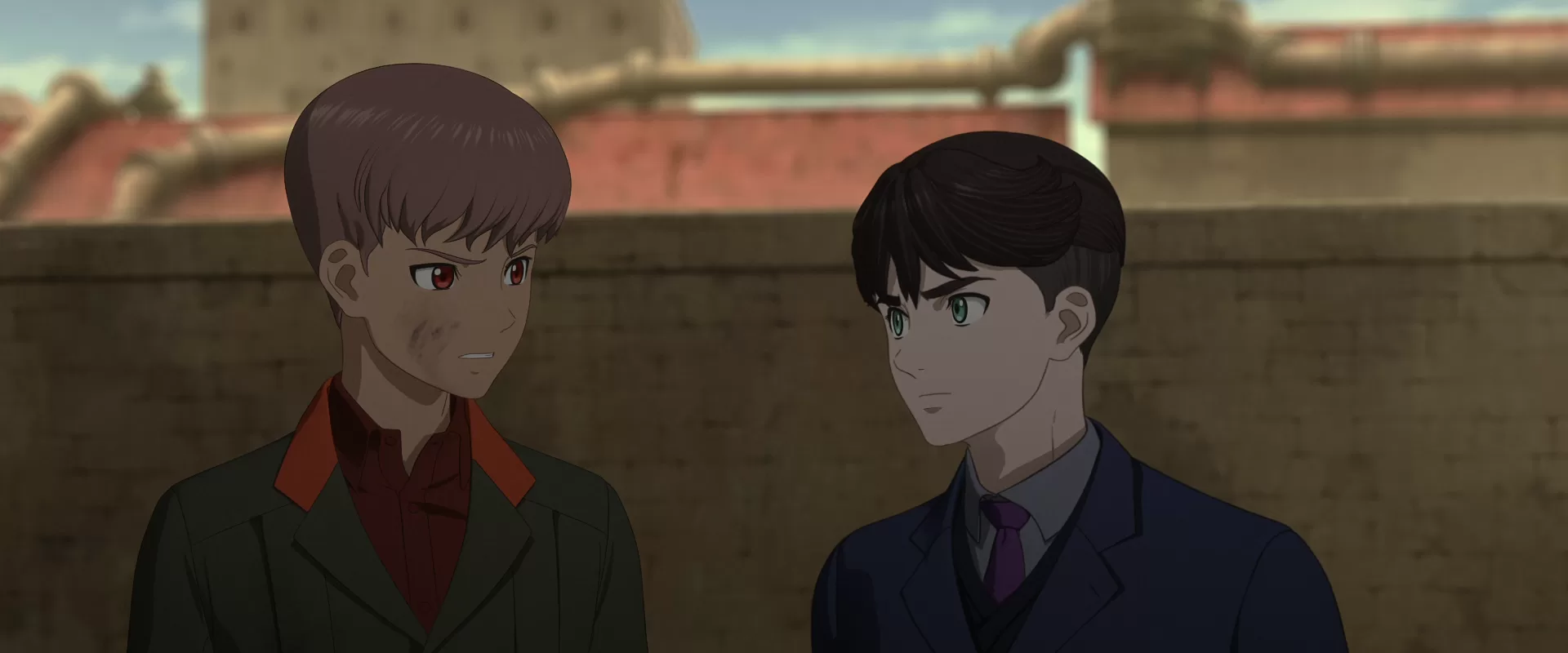
The “Leviathan” anime adaptation is now streaming on Netflix! “Leviathan” is based on a novel trilogy of the same name, written by Scott Westerfeld and illustrated by Keith Thompson. It’s an exciting steampunk twist on World War I where worlds collide and unlikely groups come together across a cultural divide.
Temple of Geek spoke with Christophe Ferreira, Director of the “Leviathan” series, about the creative process behind this beautiful adaptation.

Christophe Ferreira Discusses the Process Behind Adapting “Leviathan” from Novel to Anime
During the interview, Christophe Ferreira explains that bringing novels to life in the form of an anime is different than Japanese manga. There is more freedom. That freedom also allows the series to shine over twelve exciting and heartfelt episodes.
Q: Were you a fan of Scott Westerfeld’s work before signing on to direct the series?
Christophe Ferreira: No, actually, I wasn’t familiar with his books before joining the project. I completely missed them. At the time they were being published, I was living in Japan and focused on finding my place there.
Q: What are the differences in adapting a novel series like Leviathan to an anime versus manga or more traditional Japanese media?
Christophe Ferreira: Freedom, mainly. When you adapt a manga — especially in recent years — there’s often pressure to stay extremely faithful to the source, both in visual design and direction. It becomes a very technical exercise. With Leviathan, even though the original novels included illustrations, we were free to take what inspired us and rework the rest to suit the medium. The novels weren’t written with animation in mind, which gave us more room to explore. Manga, on the other hand, is deeply connected to animation in Japan, so adaptations tend to follow a more direct and established path.
Q: How does the production team decide which parts of the novel to animate and what gets left out?
Christophe Ferreira: That was something Alex, Alice, and I tackled right from the start when we wrote the project bible. It was actually the first step in the entire process. As for how we made those decisions, it really depends. For Leviathan, our goal was to craft a fast-paced, emotionally engaging story over twelve episodes.
Strong Writing and Emotional Connections Help Make “Leviathan” a Brilliant Series
Q: Are there any particular moments in the production process that stand out to you as highlights?
Christophe Ferreira: There are two really important moments for me: the script and the storyboard. Everything else builds on those foundations. If the writing or storyboards aren’t strong, nothing else can truly save the series.
Q: How are you hoping audiences react to this series?
Christophe Ferreira: Well, of course, I’m hoping it’s a success. More than that, I hope audiences laugh and cry with our characters — and that, in the end, their story stays with people long after the final episode.
About the Series

“Leviathan” follows Prince Alek of Austria-Hungary, who flees his home after his parents’ deaths. Alek’s homeland takes pride in being “Clankers.” “Clankers” are nations that rely on heavy machines. Alek meets “Dylan” Sharp, a young Scottish airman. Sharp is from a nation of “Beasties,” the biologically enhanced creatures that replace machines. Furthermore, they learn to embrace each other’s cultures to help end the war.
All twelve episodes are available for streaming on Netflix.


One thought on “‘Leviathan’ Director Christophe Ferreira Provides Insight Into the Adaptation Process”