
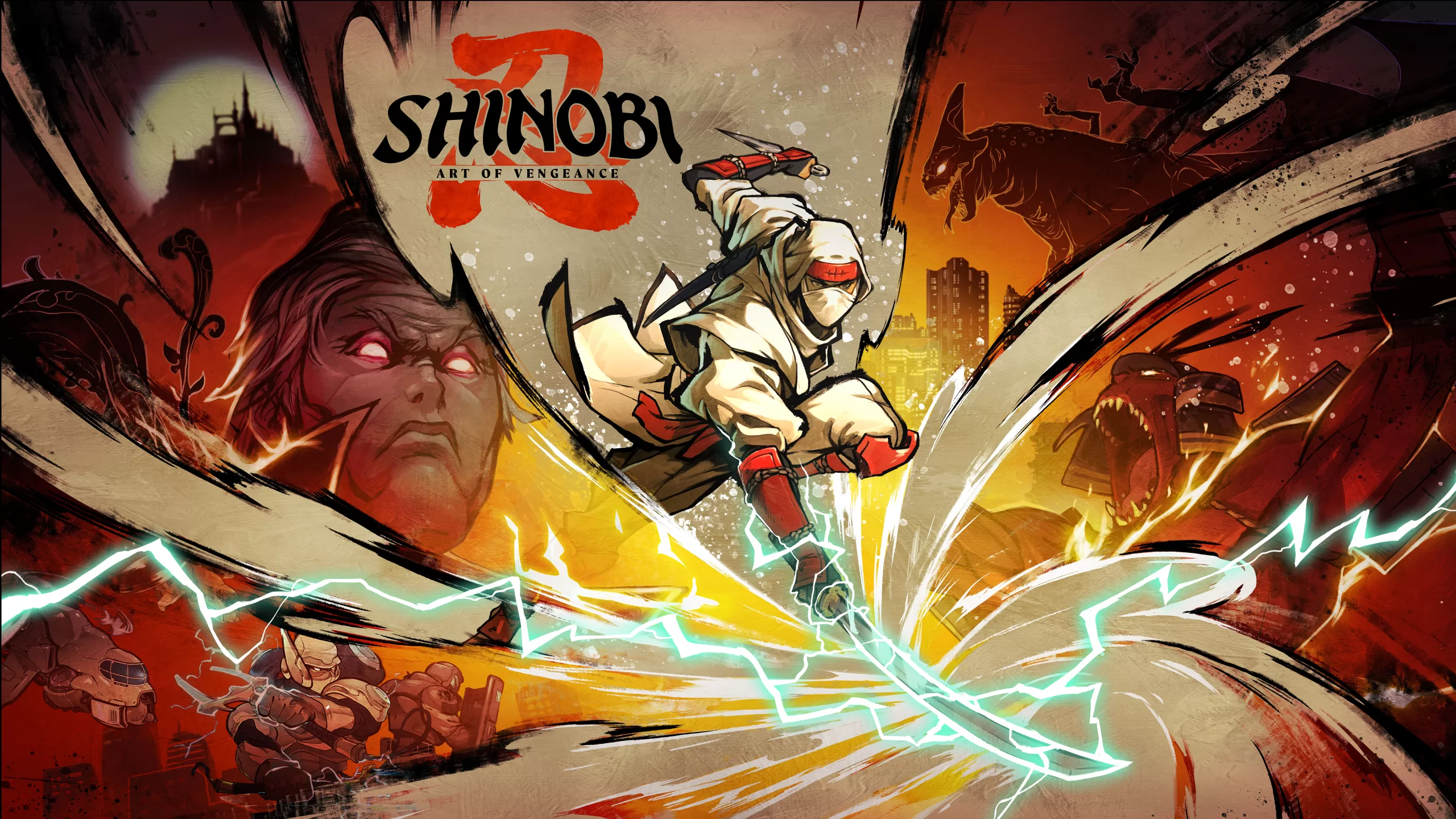
Many dorks in the video game industry (myself included) have taken it upon themselves to crown 2025 the Year of the Ninja. We’ve had games like Assassin’s Creed Shadows, Ninja Gaiden 2 Black, Ninja Gaiden: Ragebound, and the upcoming Ninja Gaiden 4. You get the picture. We’ve had resurgences of extremely popular seemingly-dead franchises and new entries in AAA titans. Shinobi: Art of Vengeance is another return to form for a long-dormant but beloved series, and is the latest entry into the Year of the Ninja. But does it have what it takes to stand tall among its contemporaries?
As part of their initiative to revive some of their older franchises, Sega has hit it out of the park with Shinobi: Art of Vengeance. Developed by Lizardcube, the studio behind Streets of Rage 4, this modern entry into the challenging 2D action platformer franchise is a welcome revival that both caters to new audiences and longtime fans alike.
A Glorious Return to Form
In Art of Vengeance, the titular shinobi returns. After his village is burned to the ground and his entire clan turned to stone, Joe Musashi (yes, that’s really his name) sets off on an action-packed journey of revenge. Along the way, he’ll meet a colorful cast of both allies and enemies, learn endless ninjutsu techniques, and kill hundreds, if not thousands, of goons that stand in his way. As you’d expect, combat is at the forefront of Shinobi: Art of Vengeance’s gameplay, and where the game shines brightest.
Mastering combat comes with a bit of a learning curve. But once you’ve customized Joe and kitted him out with different Ninpo and Amulets to suit your preferred playstyle, you’ll quickly feel like an actual ninja. Slashing, dodging, and throwing a kunai to maintain your combo count is extremely satisfying. It’s also the main focus for the game’s combat. Each hit you land without taking one yourself adds to your combo counter, and there are certain equippable Amulets to incentivize maintaining it.
For example, if you have a combo of 15 or higher, you’ll deal increased damage for as long as that combo is active. Luckily, the counter doesn’t reset after time passes, only if you get hit. In theory, you can play entire level with a 100+ hit combo while maintaining whichever boost you’ve equipped. Something I appreciate about the combo system is that you can continue to juggle a defeated enemy’s lifeless corpse to rack up the counter.

A Metroidvania-lite
Shinobi: Art of Vengeance is what I’ve been referring to as a Metroidvania-lite. It has the nonlinear exploration and map layout you’d expect of the genre. But compared to other popular titles in the genre like Hollow Knight or Super Metroid, it’s straightforward and easy to navigate. Each level is broken up into selectable sections on a world map, and you can fast travel to and from any point at any time. This made backtracking a breeze.
The game really rewards exploration, as you’ll find new upgrades, Amulets, and Ninpo if you stray off the beaten path. If you’re a completionist, each level shows exactly what you need to collect to get 100%. But in classic Metroidvania fashion, you’ll be bottlenecked into progressing the main story to unlock Ningi. These are navigational tools that allow you to better traverse the environment. You’ll get items like the ninja claws to help climb and hold onto walls or the grappling hook to reach higher places.
Questionable Checkpoints
Environmental hazards like poison gas and spike traps are everywhere, and are my biggest gripe with the game. Falling into a bottomless pit make sense to set your progress back. But hitting a spike at full health is just as punishing. Instead of just dinging you and letting you continue on your way like most other games, it’ll bring you back a room or two. Sometimes this set back was negligible, other times it got extremely frustrating to make my way all the back to a challenging platforming section only to attempt it, die, rinse and repeat. It’s a trial and error situation, since Art of Vengeance’s platforming sections are extremely difficult, but also very well designed. I just wish the checkpoints were a bit friendlier.
Then, you have optional challenge courses called Ankou Trials, the hardest platforming sections in the game. Here you’ll find some of the game’s strongest unlockables and shards of the Dark Katana, a powered up version of Joe’s main weapon. I equate Ankou Trials to Super Mario Bros. Wonder’s Badge Challenges. I know it’s a weird comparison, but when you play these, it’ll make sense. Ankou Trials are difficult, high-risk high-reward optional challenges that are well worth the time and frustration. And once you finally conquer one you’ll feel like a platforming god.

Style and Substance
I’d be remiss to gloss over Shinobi: Art of Vengeance’s visuals and art direction. When taking notes for this review, one word kept creeping into my mind throughout my entire playthrough: style. The game absolutely oozes style. From its incredible set pieces and character portraits during dialogue, to the hand-drawn comic book-style art, I spent much of my time just stopping and admiring the visuals. Joe has access to Ninjutsu abilities that require you build up Rage to unleash, essentially this game’s ultimate attack. There are four to pick from, but once you activate any of them you’re in for quite the spectacle. The action stops, Joe does a Super Saiyan-like pose, and the whole screen is affected by incredible visuals that really stand out.
Even Joe’s regular attacks have extremely stylish flair. I would purposefully have enemies respawn to just to try out new combos and watch the awesome, anime-inspired movements unfold before me.

Verdict
With the (very welcome) resurgence of seemingly-shelved video game properties, it’s a great time to be both an older and younger gamer. Shinobi: Art of Vengeance is an amazing return to form for one of Sega’s biggest franchises. It’s also one of the year’s best games. Despite some questionable design decisions in its checkpoints, the quality of its combat and depth of customization options make this an experience ripe for multiple playthroughs. As a Metroidvania-“lite”, it’s a good jumping on point for those not too familiar with the genre, if you’re up for mastering its systems. It’s also one of the most stylish games I’ve ever played, with incredible set design, art, and fluid character animations. The Year of the Ninja isn’t over yet, but Shinobi: Art of Vengeance may very well be the game that defines it.
Score: 9/10
Reviewed on PS5 with a review code provided by the publisher. Shinobi: Art of Vengeance releases August 29, 2025 on PS4, PS5, Xbox One, Xbox Series X/S, Nintendo Switch, and PC.




One thought on “Shinobi: Art of Vengeance Review”