
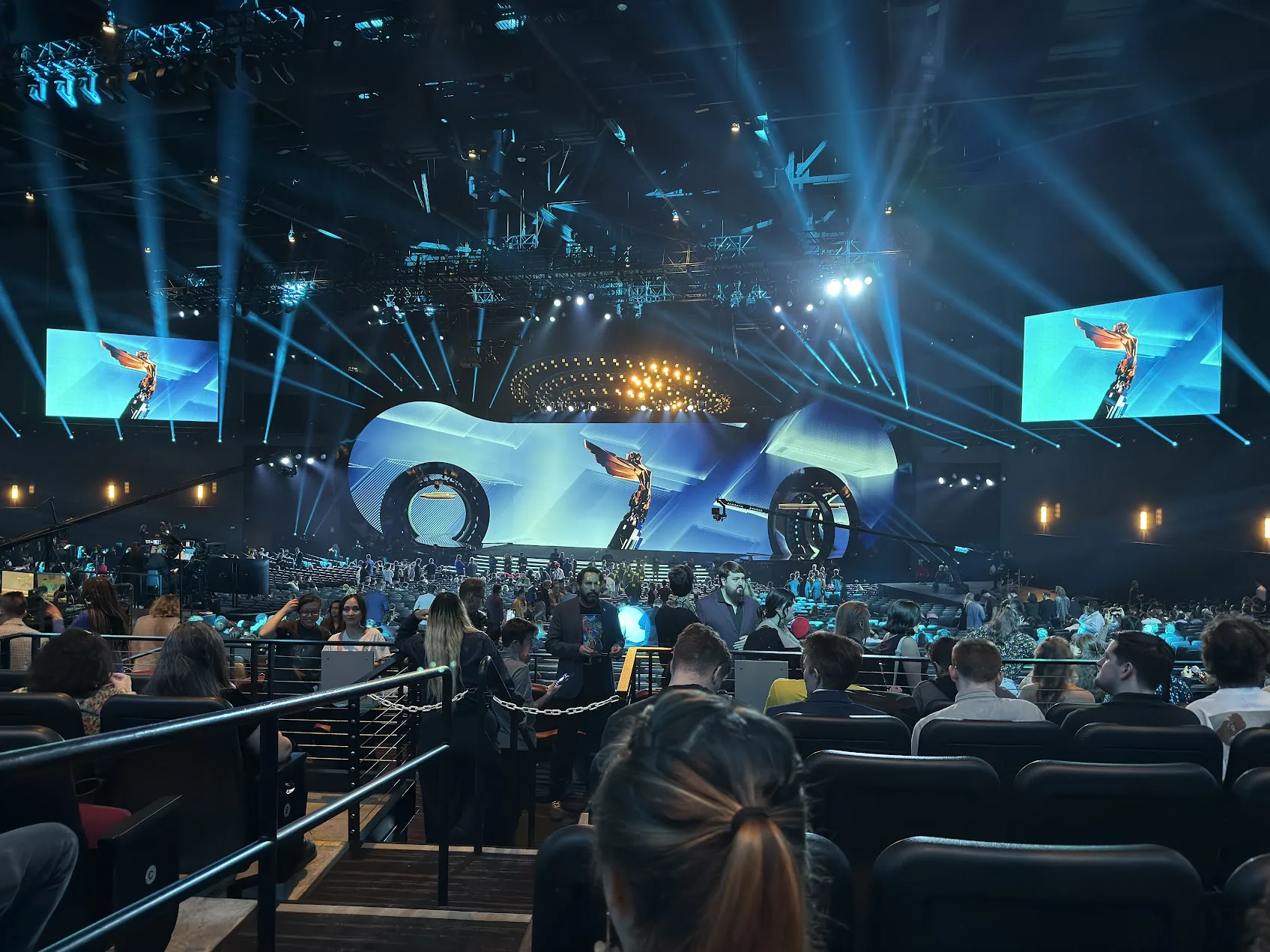
The Game Awards is built for spectacle. It’s the night of big announcements, surprise trailers, and moments designed to trend within minutes. But walking away from The Game Awards 2025, the thing that stayed with me wasn’t a single reveal or world premiere. It was a shared idea that kept surfacing across three very different conversations with Neil Newbon, Alix Wilton Regan, and Devora Wilde: games have become something we don’t just watch or play—they’re something we participate in. And that makes the humans behind them more important than ever.
That idea had already been taking shape before I arrived. In the weeks leading up to the show, I’d been reflecting on how strange—and how wonderful—2025 was for me as a player. I didn’t play the games I expected to love. I played the games that stayed with me. The ones that resurfaced long after I put the controller down. When I tried to understand why certain experiences lingered, I kept returning to the same word: connection. Not hype. Not polish. Though this year had plenty of it, not even innovation, . Connection between player and story, player and character, and increasingly, player and creator.
What surprised me was how naturally that same idea emerged in each interview, forming a larger narrative about where games are right now—and what’s at stake as they continue to grow.
Games Aren’t Passive Anymore
Neil Newbon put it more plainly than anyone else I spoke with: games aren’t passive. They haven’t been for a long time, but we’re finally treating them that way. He talked about how narrative has evolved from being a justification for gameplay into a pillar that stands alongside it, shaped collaboratively by developers, writers, directors, and performers. The key difference, he emphasized, isn’t that games are becoming more like films or television. It’s that they remain fundamentally interactive.
In games, you don’t just observe a story. You inhabit it. In choice-driven experiences, you don’t merely follow a path—you bend it. That agency changes how stories land emotionally. A moment doesn’t feel like something you witnessed; it feels like something you did. That distinction is why certain games stay with us for years, why their characters feel personal rather than fictional.
Neil framed this not as a trend, but as a maturation of the medium. Players now have a more sophisticated appetite for story, and games are meeting that appetite across the spectrum—from indie projects to massive AAA releases. There’s room for bombastic adventure and deeply personal narratives to coexist, and both can leave a lasting impact.
The Human Cost of a “Golden Age”
Alix Wilton Regan expanded that conversation by grounding it in reality. Creatively, she agreed, this is a golden age for games. They’re bigger, bolder, and more ambitious than ever. But she was quick to point out the tension underneath that success: mass layoffs, consolidation, and real people losing stability in an industry that continues to produce extraordinary work.
That contrast defined much of her perspective. The medium can be artistically thriving while still failing to protect the humans who make it. Both truths exist at once, and ignoring either one creates a distorted picture of the industry’s health.
Throughout our conversation, Alix returned to a single guiding principle: the script is the thing. The story is the thing. Whether she was speaking as a performer or a producer, story was the reason to commit, the reason to fight for a project, and the reason performance matters at all. That belief shaped her concerns around AI as well—not as a vague future threat, but as something that risks devaluing the lived human experience that gives stories weight.
Her advice was just as direct. Especially for women in creative spaces, she challenged the habit of waiting for permission. Structure can guide creativity, but it can also quietly become a barrier. Sometimes the only way forward is to step through the door yourself and build the thing you believe in.
That conviction carried into her thoughts on characters like Aya from Assassin’s Creed Origins. Alix didn’t frame Aya as a fan favorite in need of nostalgia. She framed her as a character shaped by grief, leadership, and legacy—someone whose story still has room to grow. The passion behind that argument made it clear why players continue to advocate for deeper exploration of characters who feel like they could carry entire worlds on their shoulders.
Performance as Collaboration, Not Isolation
Devora Wilde approached the same ideas from a different angle. She also called this moment a golden age, but what stood out was why it feels that way from inside the booth. Video games, she explained, are one of the most collaborative mediums she’s worked in. Actors bring ideas. Development teams bring ideas. And the recording space becomes a place of play and experimentation in search of truth.
That freedom comes with unique challenges. Devora highlighted two realities players rarely consider. First, performances are often recorded in isolation, without another actor in the room. Chemistry is built on trust—trust in the writing, direction, and the unseen work of cinematics and editing. Second, while actors become the public faces of games, they’re supported by enormous teams doing highly specialized work most of us don’t even have language for. Performance is only one thread in a much larger tapestry.
Her advice to aspiring performers cut through common misconceptions: if you want to work in games, don’t chase impressions or “funny voices.” Train as an actor. What makes performances land isn’t vocal range—it’s grounded truth. And after that, perseverance. Success rarely arrives on the timeline anyone imagines.
When Devora spoke about The Sims as a formative experience, she didn’t cite mechanics or innovation. She talked about autonomy, control, and the joy of inhabiting a life you could steer. It was a quiet reminder of what games offer that no other medium quite can.
Why This Moment Matters
Taken together, these conversations didn’t feel like isolated interviews. They felt like a single, ongoing discussion about games as a human art form. About why performance is becoming more central, not less. About why story and play are increasingly inseparable. And about why, in a year marked by instability for so many creators, the industry has to be intentional about what it protects.
The Game Awards will always be about spectacle. But the moments that linger are quieter: the realization that games matter because they are lived, not consumed. When players carry games with them—as comfort, as community, as memory—the people behind those experiences aren’t interchangeable. They’re essential.
If 2025 reminded me of anything, it’s this: games don’t stay with us because they’re loud. They stay with us because they feel human.
Be sure to join our Discord for discussions about video games and more at Temple of Geek!


One thought on “The Human Connection Behind The Game Awards 2025”