
Video game music has a unique power. It can heighten tension, soften moments of calm, and guide players through unfamiliar worlds without ever calling attention to itself. Often, players feel the impact of a soundtrack long before they consciously recognize what it is doing.
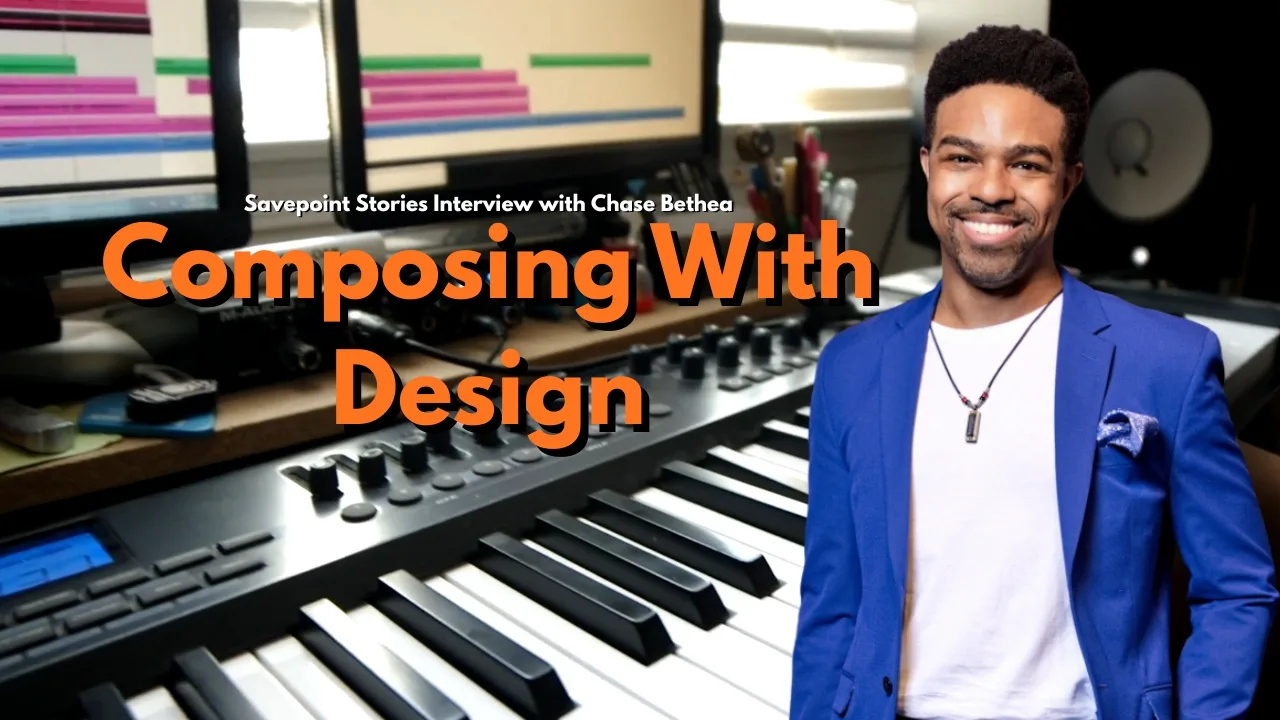
In a recent episode of Savepoint Stories, I spoke with video game composer and technical music designer Chase Bethea about how and why game music works the way it does. Rather than focusing solely on soundtracks or favorite scores, our conversation explored a broader philosophy. Chase views music as part of the player experience itself, not a layer added on top of gameplay.
Discovering Game Music Through Curiosity
Chase’s connection to game music began early. As a player, he noticed that the music in games sounded different from anything he heard on the radio. It was structured to loop, shift, and live inside interaction. It moved with the player rather than standing still.
One formative moment came from a familiar PlayStation-era discovery. Putting a game disc into a CD player revealed a full soundtrack separate from the game. That experience changed how Chase thought about game music. It was not just background sound. It was a complete creative work meant to be listened to and remembered.
That curiosity carried forward through sound tests hidden in older games and the habit of letting a single track loop endlessly while doing something else. Long before he considered composing professionally, Chase was already studying how game music communicated emotion and memory.
Becoming a Composer Before the Career Path
Music was always part of Chase’s life. He played instruments, joined band and choir, and experimented constantly, even using unconventional tools like the Game Boy Camera to write simple compositions. At the time, there was no clear career plan.
What changed was repetition. People consistently told him his music sounded like it belonged in a game. Eventually, that feedback became specific enough to push him toward deeper exploration.
Music That Reacts to Play
A central theme of the conversation was Chase’s focus on dynamic music. Rather than relying on static loops, he designs scores that respond to player behavior, progression, and context.
In the survival game Aground Zero, Chase created systems where the music subtly changes based on player choices, such as selecting different items or entering combat. These shifts are intentionally understated. The goal is not to interrupt the experience, but to support it.
In Stardander School for Witches, that philosophy extends to personalization. Players may hear different instrumentation on the title screen, and combat music adapts based on magical elements and performance. The music communicates success or struggle without explicit instruction.
Players may never consciously notice these changes, but they feel them. That subconscious feedback is by design.
A Player-First Philosophy
Chase repeatedly emphasized that he approaches composition as a player first. He studies mechanics, progression, and pacing, then builds music that reinforces those systems. He asks what games influenced a project, how the player learns, and where emotion needs support.
This mindset extends to his career as well. Chase forged his path largely through self-directed learning, experimentation, and trust in his instincts. He believes that repeated external affirmation is not accidental, but a reflection of internal truth.
Why the Conversation Matters
Game music is one of the most powerful storytelling tools in the medium precisely because it does not demand attention. It guides players through feeling rather than instruction.
This article serves as a companion to the full Savepoint Stories interview with Chase Bethea, where he dives deeper into his process, career, and philosophy. If you have ever felt like a game’s music understood what you were doing before you did, this conversation is worth your time.
Be sure to join our Discord for discussions about video games and more at Temple of Geek!


