
Podcast: Play in new window | Download (Duration: 24:15 — 21.1MB) | Embed
Subscribe: Apple Podcasts | Spotify | Android | iHeartRadio | RSS
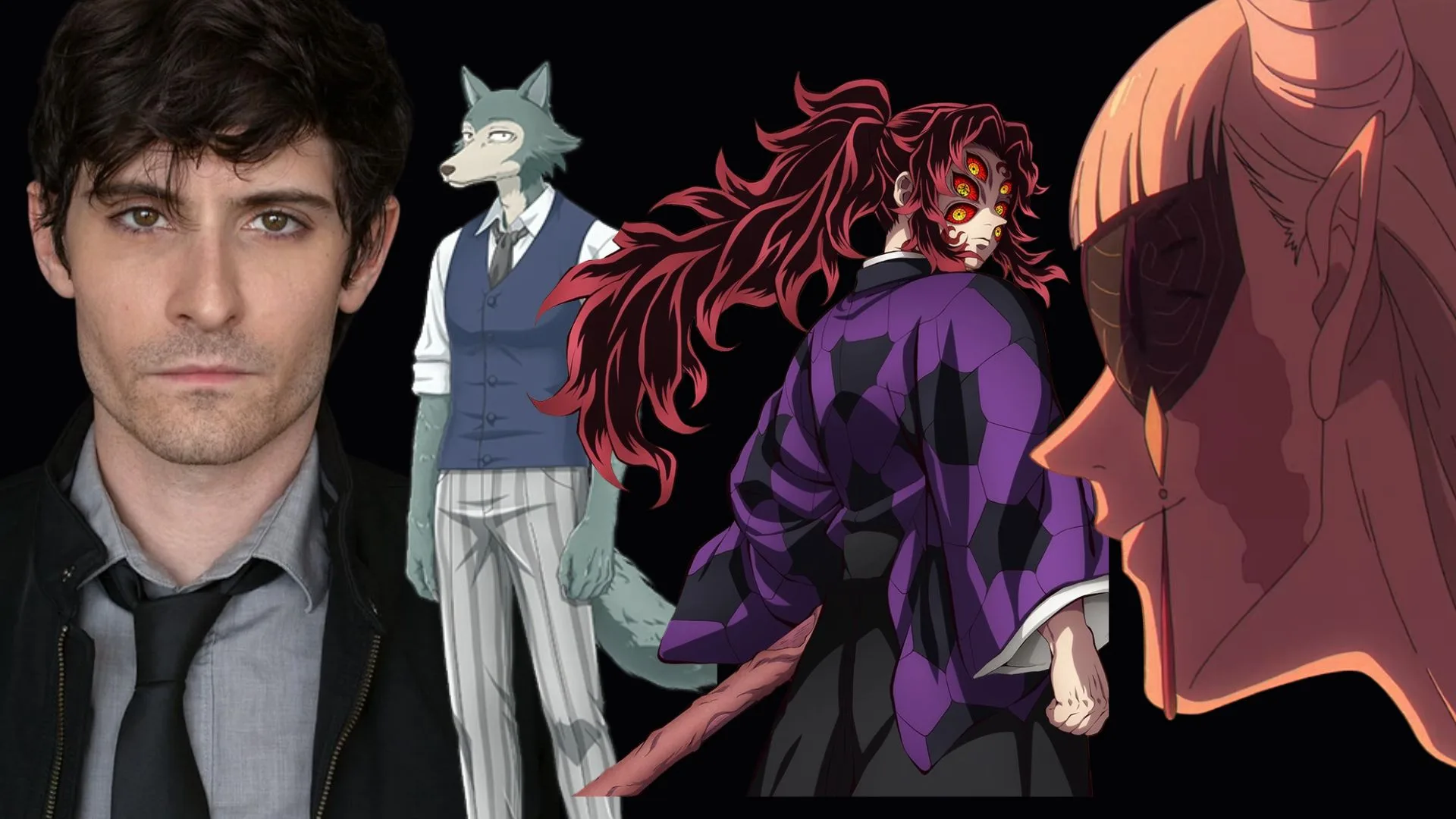
Known for his iconic role as Legoshi in the hit Netflix series BEASTARS, Jonah Scott discusses the emotional journey of bringing this character to life as the series comes to its highly anticipated conclusion.
Beyond BEASTARS, Jonah is a powerhouse in the anime and gaming world. He voices the fan-favorite Oliver Aiku in BLUE LOCK, Aiden Caldwell in the Dying Light franchise, and the formidable Kokushibo in Demon Slayer: Kimetsu No Yaiba. Jonah is a proud member of the LGBTQ+ community and a frequent guest at conventions worldwide. His extensive credits include SK8 the Infinity, Super Crooks, Kaiju No. 8, and video games like Fire Emblem: Engage.
In this interview, we dive deep into his acting process and his growth from Season 1 of BEASTARS to now.
Jonah discusses his feelings on BEASTARS and the importance of a good story having a finite conclusion
As BEASTARS approaches its highly anticipated conclusion, Jonah Scott reflects on the “surreal” experience of saying goodbye to Legoshi. While many fans are sad to see the series end, Jonah views the conclusion as a vital part of the creative process.
I’m glad to be part of a story, especially in anime, because you and I both know anime can have a tendency to get a little bit laborious and a little long. It’s nice to have a finite ending. Regardless of what your thoughts are on the ending, you got two because the manga ending is different than the anime ending… It’s been a blessing to be a part of the series. Honestly, it is as you know, it has kick-started my career in ways that I cannot describe.
How the role of Legoshi kick-started Jonah’s career and his connection to the furry community.
Jonah acknowledges that the role of Legoshi was the “big break” that defined his career. He speaks warmly of the furry community, noting how their passion for the character helped propel the show’s success and his own visibility in the industry.
I mean, in the Western world, the furry community really latched on to this a lot, and I latched on to them. And I have some of the most, fast and best friends that I’ve had that have come from that, and people seeing the show, peers seeing the show, and not knowing me as an unknown and then listening to it and being like, “Whoa, okay, this guy’s got chops. He knows what he’s doing. Now that’s cool. That’s awesome.” And as somebody that’s not very… like Legosi, as somebody that’s really anxious and not very socially, I guess adept or lubricated, having that icebreaker of, “Hey, you’re a good actor, let’s talk.” Like having that icebreaker is invaluable, being able to have my talent, like speak for itself.

Jonah opens up about a raw, emotional moment in the BEASTARS
Jonah reveals that the most difficult moment to record wasn’t an action sequence, but a deeply personal scene from the BEASTARS manga involving Legoshi’s mother. The scene hit home due to Jonah’s own experience with loss. It required him to go to a very dark, honest place.
Legosi and I have more than one thing in common. Both of our mothers are deceased. In the manga, there was a scene where Legoshi has to… reflect and confront how his mother passed. What role did he have in it? What regrets did he have? So, doing that scene when it eventually got to the manga, which was done in a very, very artful and tasteful way, hit me like a brick wall. Because, as you know, as a voice actor, especially an anime voice actor, we don’t get to see what we get to do beforehand, right? So, I walked in, and I knew it was coming at some point.
Also, talks about how his roles prior to this were more silly or only had a few lines in any given episode.
I got to, no pun intended, really take a bite out of this and just chew on it. And we took two hours to get that scene done… and I’m just like, “Okay, but took two hours to get it done.” We went back and listened to all the takes. And me and the director both looked at each other were like, dude, the one where you’re crying is it. That’s the one, that first one that we did. That was it. That’s what we kept.
For Jonah, acting is an exercise in honesty. He discusses the “Golden Truth,” the moment where an actor stops “performing” and starts living the character’s reality. Jonah describes using personal catharsis to create a genuine connection with the audience.
The difference between Jonah’s performance in Season 1 of BEASTARS and now
Looking back at the early days of BEASTARS, Jonah notes a distinct shift in his performance in both BEASTARS and overall in his career. As he grew more comfortable in his craft, his portrayal of Legoshi evolved from a technical performance into a more nuanced, lived-in character.
So in season one, Legosi and Jonah are very scared. I didn’t know what I knew I was doing, but I didn’t know the guardrails. I didn’t know what I could do. I didn’t know what I was allowed to do. I didn’t know it was socially acceptable in this environment, right? Again, I’m the kind of guy that lets my work speak for itself. And if they don’t tell me to do something, or if I don’t have really have an idea, I just kind of let it sit.
Jonah mentions how important the friendships he made are in this industry. He had people in his corner, allowing him to play a little more and find himself in the acting.
I gained that rapport and that friendship with those people. And because of that, when I came back for season two, it was let’s have fun. Let’s enjoy this process more. I did in between that, I did Super Crooks and Way of the House Husband. I did Akudama Drive. I did a bunch of other, like Sk8, a bunch of other, like really, really powerful shows that kind of needed a little bit of that cinematic gravitas. And because of that, I was like, I found the happy medium. I figured out how I can lend my own creativity to this, how I can be a little bit more of myself and have a little bit more fun and not feel anxious at work.
There is a solid connection to seeing an anxious character jump over those hurdles. Jonah heavily relates, as he sees these changes in his own life.


