
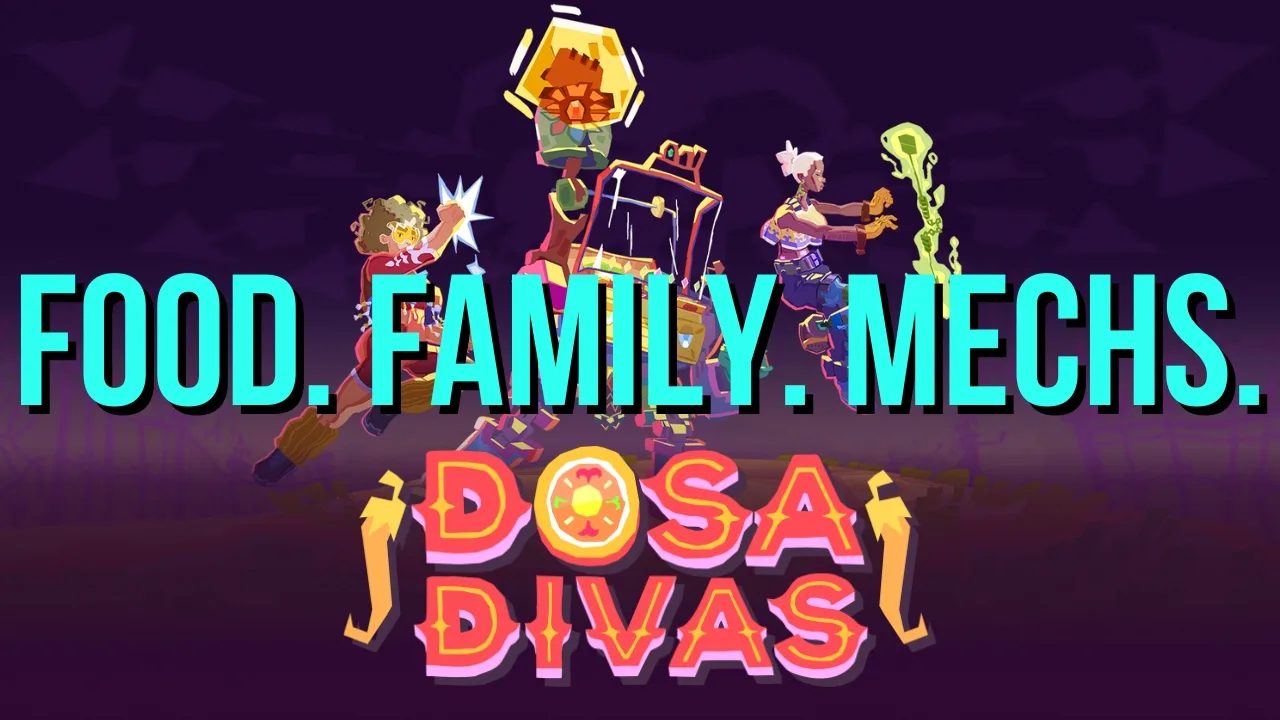
There are plenty of games that can give players satisfying combat loops, memorable characters, or a distinctive visual style. What makes Dosa Divas stand out is that it feels like it was built around something more personal. Outerloop Games’ latest title is not simply using food as flavor on top of a familiar framework. It treats food as memory, identity, family, and care, weaving those ideas into the heart of the experience.
That perspective gives Dosa Divas an identity that is easy to appreciate. Even when parts of its mechanical systems left me wanting more, the game’s heart, cultural specificity, and emotional warmth made it difficult to forget. It is a game with strong ingredients, even if not every part of the meal comes together as boldly as it could.
A Story Rich in Culture, Family, and Specificity
The strongest part of Dosa Divas is the flavor of its world. Outerloop Games has already made a name for itself through projects like Falcon Age and Thirsty Suitors, and that same interest in culture, family, and lived-in character dynamics is present here as well. Dosa Divas feels deeply rooted in its perspective, and that matters.

Rather than reducing culture to a few broad signifiers, the game leans into nuance. Conversations carry warmth and tension at the same time. Family dynamics feel layered instead of idealized. Food is not just part of the setting, but a way characters communicate care, expectation, conflict, and memory. That specificity gives the story a sense of authenticity that makes it easier to connect with, even if the exact cultural context is not your own.
For me, that was where the game landed hardest. There are small moments in Dosa Divas that feel observed rather than manufactured, and that goes a long way. It feels like a game made by people putting something of themselves into it, and that kind of sincerity is often what separates a memorable indie RPG from one that is simply charming on the surface.
Dosa Divas Combat Is Fun But Could Be More
On a moment-to-moment level, Dosa Divas is enjoyable to play. The combat has a solid rhythm, keeping turn-based encounters active enough to stay engaging without becoming overwhelming. Battles have personality, and the presentation helps them feel connected to the rest of the game’s tone.
The problem is that the RPG progression never felt as impactful as I wanted it to. While the game lets players invest in areas like spirit, health, and physical ability, those choices rarely felt like they were meaningfully changing my playstyle. I kept waiting for the progression systems to open up stronger build identity, but that deeper level of customization never fully arrived.

That makes the RPG elements feel more presentational than transformative. The framework is there, but the payoff is muted. I found myself wishing the game committed harder to its own ideas, especially when it came to the possibility of letting cooking equipment, stat investment, or character loadouts more dramatically reshape combat. There is a clear foundation for something richer here, but Dosa Divas never fully pushes that potential to the forefront.
As a result, I found myself less interested in grinding battles or experimenting deeply with progression by the second half of the game. I still enjoyed combat when it appeared, but I was mostly engaging with the encounters necessary to keep moving forward.
The Cooking Loop Fits the Theme Better Than the Gameplay
The cooking system is another area where Dosa Divas shines conceptually more than mechanically. Thematically, it is one of the smartest parts of the game. Cooking belongs here. It reinforces the game’s ideas about collaboration, care, family, and culture in a way that feels thoughtful and natural.
Mechanically, though, the loop felt flatter than I wanted it to. Gathering ingredients started out fine, but as I ran into situations where one or two key ingredients were difficult to find, the process became more discouraging than inviting. Instead of making me want to return to cooking more often, those moments made me less eager to engage with that back-and-forth loop.
That is a shame, because the emotional and thematic groundwork is so strong. This should be one of the defining joys of Dosa Divas, but in practice it became one of the clearest examples of a system that feels ripe with possibility without fully realizing it.
Accessibility Helps Smooth Over Rougher Edges
One area where Dosa Divas deserves clear credit is accessibility. By the time I became less interested in digging into every battle or every part of the cooking loop, the game’s accessibility options helped make the experience easier to tailor and more manageable to move through.

That flexibility matters. It keeps frustration from overwhelming the larger experience and makes it easier to focus on the game’s strengths when some of its systems are no longer pulling you in as strongly. It does not solve every issue, but it does show care in how the game respects player time and comfort.
A Flavorful RPG That Leaves You Thinking About What Could Have Been
The central tension of Dosa Divas is that I admire it as much for what it achieves as for what it feels capable of becoming. Its story, tone, cultural nuance, and character dynamics are where the game is richest. The combat is fun. The overall presentation is memorable. Most importantly, it feels like a game with a real point of view.
At the same time, I could not shake the feeling that its cooking and RPG systems were groundwork for something even bolder. The ingredients are good. The heart is there. The perspective is what gives the game its strongest flavor. But some of the mechanical side feels undercommitted, stopping short of the depth and payoff those ideas seem to promise.

That does not make Dosa Divas unsuccessful. Far from it. It makes it interesting, memorable, the kind of game you walk away from still thinking about. Not only because of what it is, but because of how close it gets to something even richer.
Verdict
For readers looking for an RPG with personality, heart, and a culturally grounded perspective that feels genuine, Dosa Divas is easy to recommend with some caveats. It is a flavorful experience with a lot to admire. I just wish some of its systems were willing to go as far as the story, tone, and identity already do. In the end, Dosa Divas feels like a meal made with care. Even if every bite does not fully land, it is still one worth sitting down for.
Kurosh’s Verdict: 8/10
Reviewed code provided by the publisher. Reviewed on Nintendo Switch 2.
Be sure to join our Discord for discussions about video games and more at Temple of Geek!


