
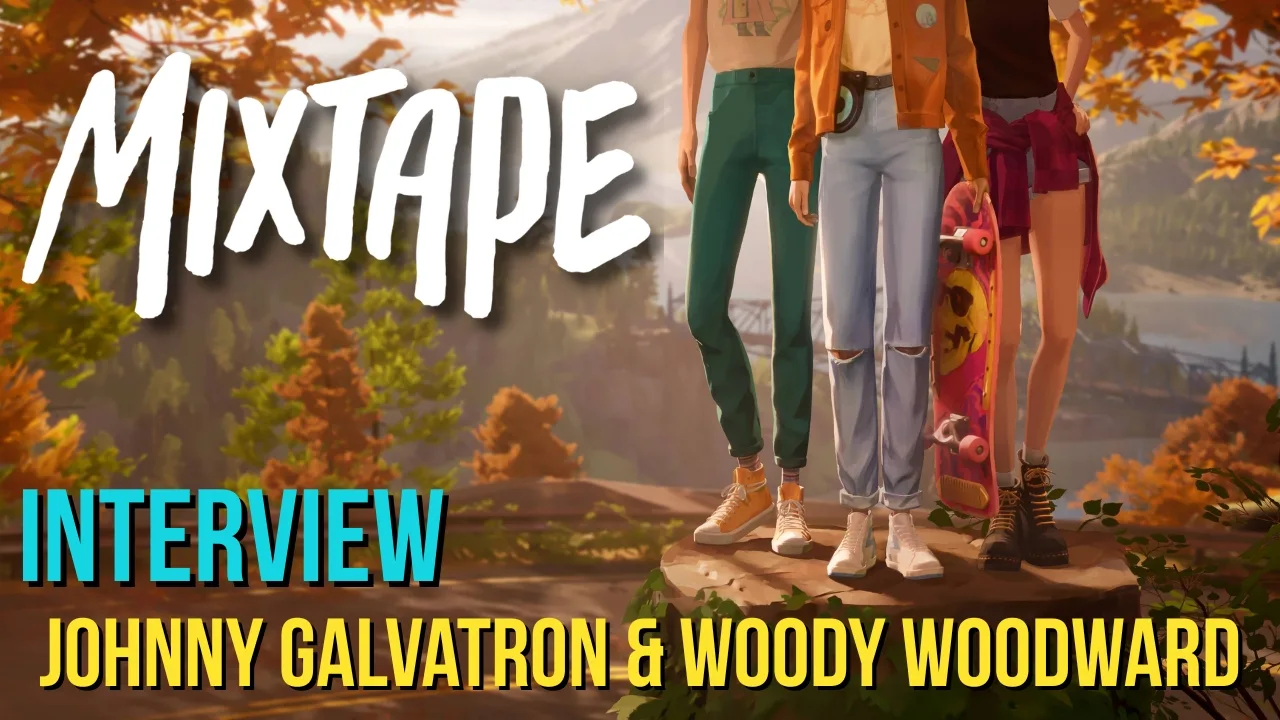
When Mixtape was first revealed by Beethoven & Dinosaur, it immediately stood out. Not because it looked like another narrative adventure game, but because it felt like something else entirely. Part movie, part album, part playable memory, Mixtape blends music, adolescence, and visual storytelling into a coming-of-age experience centered around three teenagers spending one final night together before life changes forever.
Ahead of the game’s release, we sat down with Game Director Johnny Galvatron and Producer Woody Woodward to discuss the origins of Mixtape, the influence of music culture, the lessons learned from The Artful Escape, and why the team wanted players to “be into stuff.”
A Mixtape of Music, Mechanics, and Memories
At its core, Mixtape follows three friends on their last night together as they head to a party while listening to what Galvatron jokingly calls “the greatest mixtape of all time.” The soundtrack includes artists like Devo, Joy Division, and The Cure, but the music does far more than simply accompany gameplay. Galvatron described the project as “a mixtape in many ways,” explaining that the concept extends beyond songs into the game’s structure, aesthetics, and pacing itself.
Rather than locking the experience into one specific decade, Mixtape intentionally pulls inspiration from multiple eras at once. The characters, bedrooms, technology, and visual references all feel slightly disconnected from time in a deliberate way. That collage-like structure became foundational to the project’s identity. “It’s an art of arrangement,” Galvatron explained while discussing mixtapes as a format. “A collage.”

That philosophy bleeds into every corner of the game. Different animation styles, changing visual languages, and tonal shifts all work together to create something that feels closer to late-night MTV programming or a memory stitched together from emotion rather than historical accuracy.
The John Hughes Energy Behind Mixtape
While Mixtape carries the DNA of music culture, it also channels the emotional energy of classic coming-of-age films and television. During the conversation, Galvatron cited inspirations like Wayne’s World, Bill & Ted’s Excellent Adventure, and Dazed and Confused as major touchstones for the game’s tone and camaraderie.
That influence is immediately visible in how Mixtape handles friendship, awkwardness, and emotional stakes. The game embraces the idea that teenage experiences feel monumental even when the actual problems are relatively small. Galvatron explained that he loves stories “hanging on this precipice of when things will change and never be the same.”

That emotional transition point becomes fertile ground for Mixtape. It is less concerned with world-ending stakes and more interested in the intensity of growing up, finding identity through art, and navigating the bittersweet realization that certain moments in life only happen once.
Making Mixtape Feel Like Music
One of the most fascinating aspects of the interview was hearing how closely the team treated the game like an actual mixtape during development. According to Woodward, the developers essentially laid out the entire experience like a tracklist, building rough versions of the game from start to finish so they could “listen” to the experience as one continuous emotional piece.

Songs would shift around depending on gameplay pacing, emotional tone, or how scenes flowed into one another. Sometimes a dramatic moment required an unexpected song choice to better emphasize the emotion underneath it. Galvatron noted that a sad scene did not always require a sad song. Occasionally a more upbeat track would create stronger emotional contrast and make the scene resonate even harder. That attention to musical rhythm extended into gameplay pacing as well. The team repeatedly emphasized how important transitions, flow, and emotional timing became throughout development.
Lessons Learned After The Artful Escape
As the studio’s follow-up to The Artful Escape, Mixtape also represents an evolution for Beethoven & Dinosaur as a team. Galvatron explained that one of the biggest lessons learned from The Artful Escape was understanding how essential pacing is in narrative-driven games. Because that previous title functioned as a largely linear experience, it taught the team how visual flow, music transitions, and scene progression directly impact player immersion. The team carried those lessons directly into Mixtape, particularly when it came to blending music seamlessly between scenes and gameplay moments.

Galvatron also reflected on the collaborative nature of game development itself, describing how years of iteration allowed every member of the team to leave their fingerprints on the final experience. Walking through completed levels near the end of development became emotional because he could recognize individual contributions from artists, animators, and designers throughout the game world.
“Be Into Stuff”
When asked what they ultimately hope players take away from Mixtape, both developers delivered an answer that perfectly captures the game’s spirit. “Be into stuff,” Woodward said.
Galvatron expanded on the idea by encouraging players to care deeply about music, art, and the communities surrounding them. It is a sentiment that feels deeply embedded into every frame of Mixtape. The game is not simply nostalgic for old music or youth culture. Instead, it celebrates passion itself. The excitement of discovering something that defines you. The joy of obsessing over albums, movies, games, and scenes that shape who you become.
If Mixtape succeeds in capturing even a fraction of that emotional connection for players, Beethoven & Dinosaur may have crafted something special once again.
Be sure to join our Discord for discussions about video games and more at Temple of Geek!


