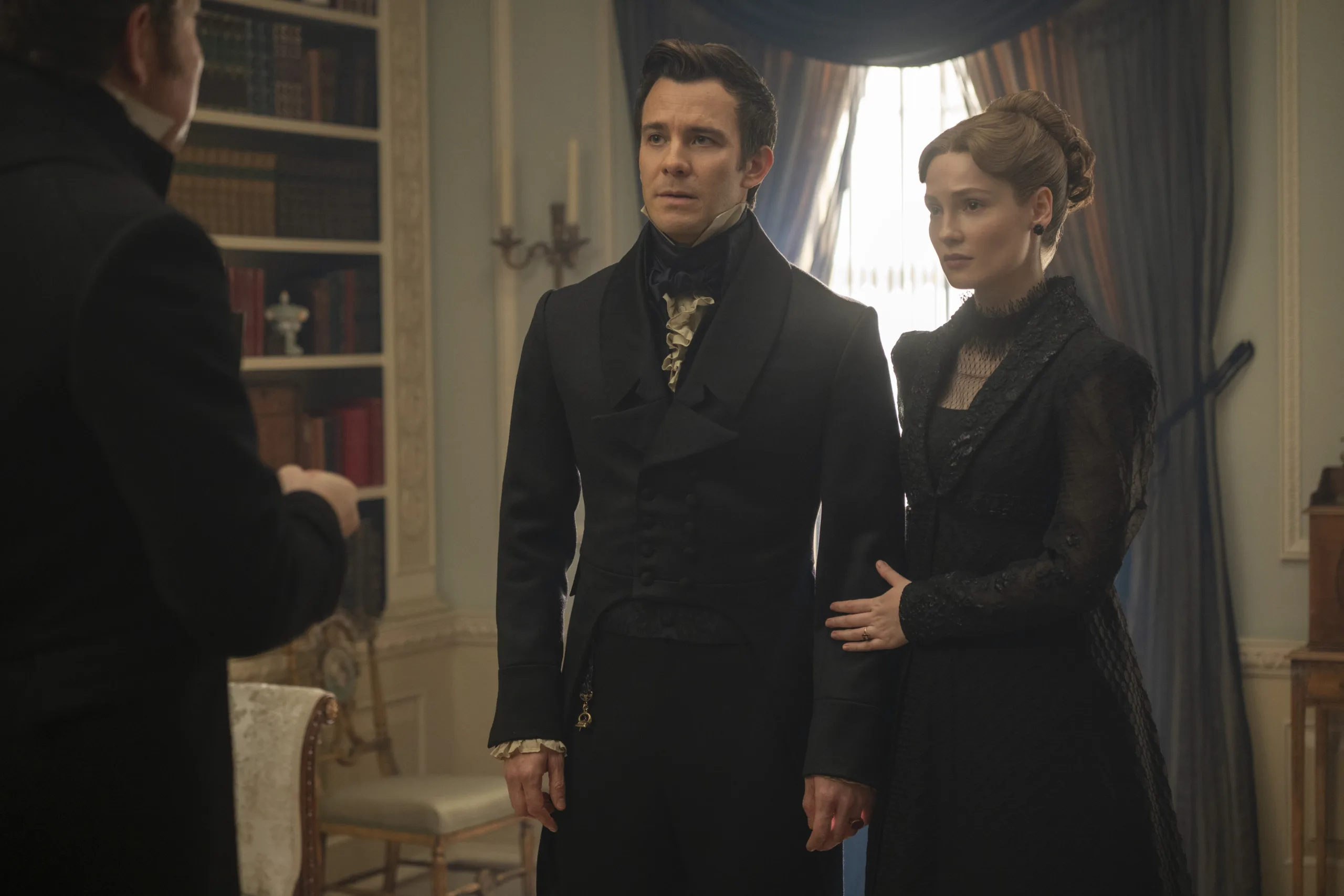
The Bridgerton universe has never been a stranger to societal drama, but Season 4 marked a distinct, more mature shift for the Ton. For many viewers, the exact moment it became clear this season was going to be entirely different didn’t happen during a grand ballroom declaration or a secret rendezvous. It happened in a quiet, fiercely charged moment of sibling solidarity: the scene where Benedict stands up for his sister, Francesca.
This powerful sequence bridged the gap between two of the show’s most complex emotional arcs, using the rigid expectations of the Regency era to highlight a profound bond between brothers and sisters.
Francesca’s Season of Quiet Grief and Chaotic Sparks
To understand the weight of Benedict’s defense, one has to look at the immense pressure mounting on Francesca (Hannah Dodd) throughout the fourth season. Navigating her quiet marriage to John Stirling, Francesca spent the early part of the season fulfilling her duties as the newlywed Lady Kilmartin. While she and John shared a deep, peaceful friendship, she was constantly beset by the looming societal pressure to beautify their estate and produce an heir.

Compounding this delicate balance was the arrival of John’s cousin, Michaela Stirling (Masali Baduza). Taking on the mantle of the beloved Michael from Julia Quinn’s novels, Michaela brought a magnetic, chaotic energy that introduced an undeniable, complicated spark to Francesca’s life. This dynamic thoroughly challenged Francesca’s rigid approach to life and her perfectly routine marriage.
However, the season took a devastating turn when Francesca was forced to navigate profound heartbreak, fertility struggles, and ultimately, the tragic loss of John.
The Intersection of Class, Grief, and Society’s Expectations
Bridgerton has always toyed with the concept of the class divide. However, Season 4 brilliantly tied Francesca’s grief back to Benedict’s own personal turmoil.

Throughout the season, Benedict grappled heavily with the suffocating expectations of the Ton regarding his love for Sophie. Viewers watched him process how differently society treats Sophie due to her status. But the narrative reached a masterful crescendo when Benedict was forced to witness how that same society treated his own sister in her deepest moment of loss and heartbreak.
When Benedict erupts in defense of Francesca, it adds a brilliant, multi-layered depth to the historical commentary of the series. His outburst highlights a painful reality: even in the wake of devasta
ting personal tragedy, society’s rigid expectations of women never waver. A grieving widow is still expected to perform and to conform. She must maintain the pristine facade of the Ton, regardless of her internal shattering.

It was an unexpected, incredibly mature creative choice for the show, showcasing that even in the Regency era, the unfair burdens placed on women, and those on the fringes of society, run parallel.
Setting the Stage for Season 5
The brilliance of how this specific scene was shot underscores its importance. Ending with the camera lingering on Francesca, the lasting image was burned into the audience’s minds. It leaves her in mourning, yet hints at the resilience that will allow her to smile again.

This emotional foundational work perfectly tees up the upcoming Season 5, which will officially spotlight the introverted middle Bridgerton daughter.
By allowing Benedict to champion his sister in Season 4, Bridgerton didn’t just give us a memorable family moment; it fundamentally shifted the stakes. It proved that the series is ready to tackle the darker, more nuanced realities of love, loss, and societal hypocrisy. Making Francesca’s upcoming journey toward her own future romance all the more compelling.