
“Critical Role” is set to return May 21 with the Seekers, Soldiers, and Schemers reuniting for the first time since the overtures. Each table has learned a piece of the puzzle that is the larger mystery of Dol-Makjar and the death of Thjazi Fang. The impressive cast includes Luis Carazo, Liam O’Brien, Marisha Ray, and Taliesin Jaffe as the Schemers. Travis Willingham, Laura Bailey, Robbie Daymond, Sam Riegel, and Whitney Moore as the Soldiers. Aabria Iyengar, Alex Ward, Ashley Johnson, and Matt Mercer as the Seekers. With Brennan Lee Mulligan serving as Dungeon Master for all three tables.
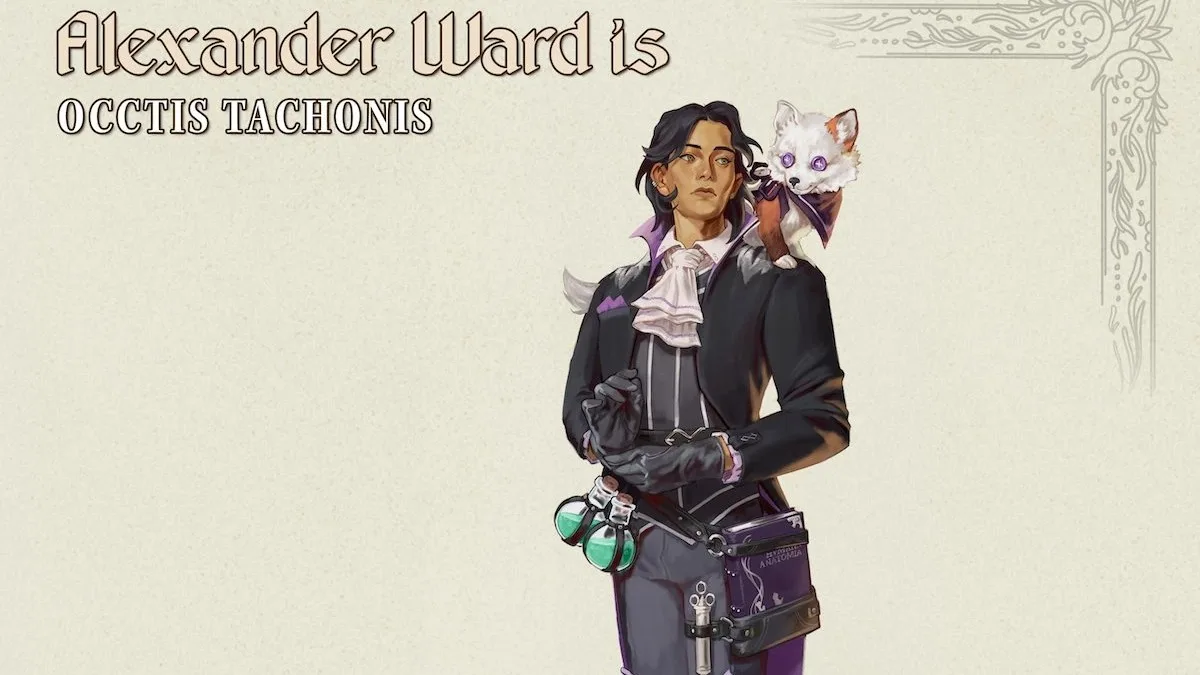
With the three tables reuniting the stories they have helped craft will weave together likely uncovering secrets and more plots to explore. While every character is intriguing one that has stood out is Occtis Tachonis played by Ward. Occtis, a member of the Tachonis Sundered House, was killed in the overture by his own family. Shockingly brought back to life he remains undead and throughout the first arc has been attempting to discover the truth about his death and his new life.
In an exclusive interview with Temple of Geek, Ward shares insight into his character Occtis Tachonis. He examines how Occtis has been shaped by his death and the Seekers Table. Ward also explains how he could be shaped by other characters in “Critical Role” Campaign 4.
Alex Ward’s Critical Role Character Creation Insights
Temple of Geek: One of the things that I’m really curious about with Occtis, I loved the flashback with him and Thimble. That’s very, very cute and very fun and nice to see kind of Occtis before he’d been traumatized for as long as he had. But I was also really curious about kind of his relationship with Thjazi.
Alexander Ward:
My relationship to Thjazi is interesting, or Occtis’s relationship to Thjazi. It comes from the headspace of being like, okay, so as we’ve seen, Occtis’ whole family doesn’t like him. And growing up in an environment, even early on when he was eight years old, where it’s not openly hostile yet, but he is a disappointment.
And he’s found somebody in Thimble who is accepting of him and likes him even if in that beginning little scene it was more of a passing, “This kid’s interesting.” Or whatever her motivation was. He’s found somebody who doesn’t out of the gate or at least isn’t disappointed in him and finds him interesting. So, even though his relationship with Thjazi in that moment is just meeting him as someone who, he’s friends with Thimble, he’s this guy.
Between that point when he’s eight and when he is 20, when we see him at the beginning of the campaign, there are other things that have happened that we have not gone into yet. But just from that standpoint of being a child, he so immediately latches on to his friendship with Thimble, as one person who doesn’t think he’s a disappointment, that because Thjazi is important to Thimble, Thjazi is important to Occtis.
Temple of Geek: One of the things I really enjoy about your play style on “Critical Role” is you establish these characters having relationships with other player characters before going in. We saw it with Divergence and now here. What was it like to have established this mentor-parental bond with Aabria’s character and then see that sort of not necessarily fall apart, but definitely have a break after kind of the prologue?
Alexander Ward:
So I love stuff like this. Having a prior life, I think, is very important when starting an RPG to give your character something to reference. To pull from previous experiences that have happened before their life inside the actual game, because we all have that. To make a well-rounded character or a person that you’re trying to portray, you need to have previous experiences in your life. My relationship with Aabria’s character went through some changes in the initial, us talking about it and figuring it out. Because I initially had a very different idea of the character I was going to play on this season of “Critical Role.”
So, I had to make some adjustments when Occtis became who I ended up playing. Who I adore and would not change for the world. But we initially were going to have a much more fraught relationship with each other with the initial character idea. That ended up not being that way, and we came up with this– oh, actually, maybe it’s just this kind of mentor, surrogate mom-feeling character. And that’s where we were going to play with that. We were very much going to be that group.
And then as we started playing, we realized, oh, there’s something else here that we can, we’re pushing in different directions and we’re kind of doing it unconsciously. Or the characters are not speaking about it to each other. So, we’re going to hit this breaking point where we’re going in two separate directions and the tether is going to get strained.
That was interesting to both of us, of, oh let’s play through that and see if we come back together. How we can work through that. Because conflict between characters is incredibly important in a storytelling medium. Because if you don’t have conflict between characters, what is the story? If everyone’s agreeing and happy with the status quo, nothing evolves. You need those moments of strife to either propel you forward and mend a relationship or propel you apart.
Temple of Geek: Yeah, it was that moment where Occtis is like, you’re blaming everything that happened with my family on me and I wasn’t even here for a lot of it. It was not only like so cathartic, but it was such an important moment because it was this thing where it felt like Thaisha hadn’t clocked she was doing that. And just having Julien also be like, no you are doing that.
Alexander Ward:
The wonderful thing about the way Aabria is playing Thaisha is this incredibly high wisdom character. But how do you add a flaw to a high wisdom character who’s supposed to be very in touch with themselves and very in touch with their feelings? And how emotionally intelligent? Is to have these blind spots of you’re so in touch with what you’re doing and you’re so used to this that you just believe you’re right. And so then to trust your gut so heavily that you miss your own blind spots is a wonderful way that Aabria has been playing Thaisha and is something that I love so much.
“That’s Such An Accomplishment For [Occtis]”

Temple of Geek: One of my favorite moments was when Occtis sent the vulture after the pigeon, only to learn it would not catch up. Were you that like I’ve created a horror story for this pigeon?
Alexander Ward:
100%! I was like, Oh, this might be a solution to a problem! And then Brennan narrated and I was like, Oh, oops, that’s not going to do anything. And that was very fun for me. I love that. I love the idea of, okay, here’s an idea, I’m going to try it. And because of the dice rolls and because of how the story works it’s like, oh, that didn’t work out. But it was an interesting narrative moment and a funny story and that’s the best. And then for him to bring it back up later. And then for a second me thinking, did I actually do it? Did it work? And then be like, “No, it didn’t work at all. Ah, sh-t.” You know, like, it was very fun.
Temple of Geek: It was so funny, especially when he checked me, like, “It doesn’t say he goes away.”
Alexander Ward:
Yeah. Which, I understand that, like, within the rules, like, narratively, it worked great, and I like the way we played it. I understand that because I had also summoned the cat in the room, technically the vulture would have disappeared by the rules of D&D. Only one can exist at the time because it’s a concentration spell. But I liked Brennan’s narrative so much I was like, let’s just go with it. Whatever, it’s fine. It was just a funny moment.
But, I am very aware that by the rules of Dungeons & Dragons that would not have been able to happen. But this is the thing, sometimes, when playing a game you have rules. They don’t necessarily fully support the story you are telling. And the point is the story. And the point is the fun with your friends.
So, it is okay to bend the rules and do something a little different if it makes a fun moment for everybody and everybody laughs and has a good time. That’s what you remember, you’re not like, well, the rule was wrong. You remember the funny thing that happened with your friends.
Temple of Geek: I prefer the version that the vulture is just out there forever.
Alexander Ward:
Yeah. It’s very silly and I love it. Yeah. It’s just become this nemesis for pigeons. Uh, it was great.
Temple of Geek: One of the things I find really, really intriguing about Occtis, and I think you talked a little bit about it on your Fireside Chat, he’s so intellectual in a way that when Thaisha’s very much looking at things morally, Occtis is more examining them. So, when that question of what if you could bring a god back to life arose, it was not a hard no for him. It was, “Well, that’s interesting. What if I could do that?” What was your thought process on that?
Alexander Ward:
Yeah, the thought process there for Occtis is, it’s so far beyond what he believes he’s capable of because of how he’s been raised and how he’s like felt about himself. He’s like I managed to bring a vulture back. That’s incredible to me. I’ve hit this milestone as a guy who by his family standards has no ability and is a complete dud.
He managed to do it; he’s learned a little bit of magic, and that’s such an accomplishment for him. The idea of being like, can I bring a god back to life? This incredible being. It is so far beyond. It is purely a theoretical concept to him. There is no belief in him that he will ever do that. So the idea is interesting. This idea of, what if I could do this? What is this? How would that even go about? It is an experiment and a hypothesis. It is not something he believes he could ever do.
So whether or not it’s right or wrong doesn’t matter because it will never happen in his mind as of right then. So it is very much a thing of being like, well, yeah, it’s fun to think about. It’s fun to think about if me as Alex is like, well, what if I could fly? Yes. That’s never gonna happen, but it was cool to imagine sometimes I can do, like, I can do this and I can do that. And like, I’m never going to do it. So, it doesn’t matter if flying is morally correct. That’s where Occtis’s headspace is now.
“I Finally Have Anybody Who Cares About Me Even A Little Bit”

Temple of Geek: I love that Occtis is like, what a fun logic problem. And Thaisha is like, No. Don’t do that.
Alexander Ward:
Yeah. He factually understands the relationship and why the gods were what they were. And what they did and the effect it had. He understands all the factual aspects of that and the things that he has read. He never experienced any of that. So he is purely a thing of bad things happen to people, they rose up, they fought the gods, they killed them. But there’s no emotional connection to that for him.
He doesn’t understand that feeling of the oppression. He’s a kid, like he’s an adult; he is 20 years old, and will be forever. But he emotionally is still a little bit of a child and doesn’t understand he’s had no ability to express these emotions. And no one to foster those healthy expression of emotions until some of the people he’s met now. Julien’s not a great role model for emotional stability.
He’s learning as he’s going. He’s trying to figure out. And now there’s the hurdle that he’s dead. Emotions kind of work differently now. He doesn’t have the same animal instinctive processes that a human being does anymore. They’re kind of deadened. So now he has an even further barrier to work through to be fully emotionally intelligent and be in tune with these things.
Temple of Geek: He’s always been kind of seen as useless by his family. And now he has three people that are seeing him as useful. How is that impacting him? Because it’s not necessarily like we’re friends, we love you no matter what. You’re useful to my cause for this reason. You’re useful to me for this reason. While at the same time they clearly have some level of care for him, but it’s still so charged by that idea of usefullness versus uselessness.
Alexander Ward:
I think I mentioned everybody wants something from me at some point early on. He understands; he can see it intellectually. He understands that everybody wants, but even if it’s not true caring and true desire for him just to be and want for him to be a person and to be happy. It’s better than what he had.
Yeah, they may want something from me, and they may not be wholly on my side because they just care about me, but at least they care about me a little bit. At least from his perspective, because he never – obviously his family killed him. But whatever their emotions are in that situation he can’t know those emotions. So, from his perspective it’s like, oh I finally have anybody who cares about me even a little bit. Even if it’s conditional.
Temple of Geek: All of your characters are so sad.
Alexander Ward:
Well, you know, I’ve gotta give Liam a run for his money. I gotta challenge him for the sad boy crown.
Temple of Geek: They’re all so tragic and traumatized.
Alexander Ward:
Well, when we were all making characters together, we’re all figuring this stuff out, and it’s like, and some people… People have their strengths in their stories they want to tell. I like a character who has some stuff that happened to him. And in avoiding the “tragic backstory” we just made it a tragic current story.
You try and find, especially in a group this large, you want to try and find your piece of the puzzle and where you fit. And not to tread over an area that someone else is treading. If two of you are telling the same story, then that limits the scope of the story. So it was very much when we were all doing the character designing and talking about how we wanted to do things, which was just like we were all discussing and chatting and it was a very collaborative effort.
I saw the piece where Occtis fit, and I was like, oh, that’s where I should go with this. That’s the piece where I can have my part of the story that doesn’t infringe too much on anyone else’s story and then bring people into that story and have connections and weave that together to make one sort of tapestry.
Who Will Shape Occtis Tachonis’s Moral Compass In Critical Role Campaign 4?

Temple of Geek: I’m so interested to see Occtis interact with other characters like Azune and Bolaire. There’s so much there. I’m so excited.
Alexander Ward:
Yeah, I am too. We’ve done some things. I’m excited for people to see what we have done that hasn’t come out yet. But it’s interesting cause like we also like the pace at which the story has been moving so far has limited the amount of downtime that we as the characters are experiencing which doesn’t allow us to have as many in depth conversations as we might be wanting to have as these characters.
But that then adds a level of drama to it where it’s like we don’t have time to talk about this, but it is an undercurrent that is like, I want to talk to you about this, but I don’t have time because we have to do this thing that’s time sensitive. So, I’m looking forward to when we finally get to have some conversations. And we get to a point where there is downtime where you can talk. It’s fun to work through the obstacles of a time sensitive narrative.
Temple of Geek: You talked about in your Fireside Chat wanting to kind of buck the trope of the kid born in a really, really terrible environment who just automatically knows good and bad. Who’s like immediately has the moral compass that would not realistically be possible in that situation. How do you think Occtis’s, not necessarily moral compass, but maybe perception on the concept of good and bad is being impacted by these three characters?
Alexander Ward:
Yeah, it’s interesting there is a little bit of confusion that’s happening in him right now because of the way that Vaelus interacts with the world, versus Julien interacting with the world, versus Thaisha interacting with the world. Right now he’s in a state of being like, I’m trying to appease everybody. I’m trying to be the thing that everybody wants me to be. Which is why him and Julien are butting heads a lot of the time because he’s trying to be nice. He’s trying to be like, Julian just wants nothing about it, but we did reach a somewhat of an understanding towards the end of the Seeker’s Arc.
Kind of understanding where people fit in him seeing what happened. Actually getting factual evidence that what happened to me was not my idea. And so that put kind of me and Julian on hold, like we’re simmering in the background right now. But Vaelus is so sweet to him, but he also knows that she wants something from him. And his relationship with Thaisa is confusing. And the situation there hurts his feelings a little bit, but he’s like I’m trying to be an adult. I’m trying to be the person I am. Also, I’m trying to find who I am.
So this is a very confusing situation for Occtis to be in as far as how he feels. But he’s very much taking his cues from everybody else into what is good and bad. Because all he’s known his whole life is, I know what my family did. And I know some of that seems fine. But like the moment where Thaisha points out the cages and I blow past it entirely.
And then she calls back and I go, Oh, of course. Yeah, right. Bad. But like, to him, it’s like, yeah, that’s standard operating procedure for an encampment of my family is to have a place to keep people when you need to keep somebody in a place. And it’s just the moral-ness of it didn’t come into play until someone called it out to him because he’s running on autopilot in that way.
Temple of Geek: Is there a character you’re most interested to see how their concept of good and bad or morality could impact Occtis? Not necessarily because it’s right.
Alexander Ward:
I think the one that would help Occtis be more aware of morality and sort of an honorable way of doing things would either be Kattigan or Teor. Spending more time with them would maybe kind of show him a way of conducting yourself with an honor and a way of like really being like, oh, I understand like the objective right and wrong.
I think spending time with Bolaire might send him on the opposite path of being like, oh, what I want is important. It all depends. I have ideas of where I want him to go, but I try not to build anything out in the future. I try to only build what happened in the past and allow the storytelling to direct me in a situation and the way to go. So, depending on how this narrative unfolds and where I end up will push Occtis in a direction. I also don’t know where that’s going to go. So, I’m excited to find out.
Alex Ward Shares Why He Loves Actual Play Storytelling

Temple of Geek: It’s almost like that moment of we have like so many “What If…” opportunities with that to see what will happen. It’s so interesting.
Alexander Ward:
Well, that’s the fun of these games. This is why this medium is so interesting: because so much of it is unplanned, which can be stressful, especially when you’re trying to make a show. Because one of the wonderful things about making a movie or a television show is you know what’s going to happen. So you have a roadmap and you go, “Okay, we need to shoot this. We need to do that.” You have a checklist.
With this you don’t. Obviously Brennan has his own story in mind, but it’s constantly changing. We’re constantly destroying what he wants. We’re changing what we want. It’s all in flux. Which is incredibly exciting and creatively fulfilling while being stressful at the same time, but that’s the fun of it. And why it’s an incredible medium in which to perform.
Temple of Geek: And to watch. I’ve talked to people who don’t watch actual play and I’m like, you can’t really explain this; you just experience it. It’s so cool.
Alexander Ward:
Well, and that’s one of the things, is it is not a medium that everybody enjoys, and I fully understand that, nor do I think that they’re wrong. It is a medium that tells a certain type of story, and if you don’t like that, that’s okay. I happen to like it. I love creating it. I hope everybody watches it and loves it because making a piece of media like this doesn’t really matter unless the people observing it like it, or enjoy it, or consume it, and see it.
So, making it in a vacuum is fun for us, which is part of it, but I want it to be enjoyed. I want it to be seen. And for people to see these characters and enjoy the stories and be engaged. But I’m not going to blame anybody if it’s not their cup of tea. It’s not my mom’s cup of tea. She’s like, “I know you do a show and that’s very cool and I support you and I will watch it but it’s not my medium that I enjoy. I’m not hungry for this.” She’s very supportive of what I do in this moment but it’s just that. I love this medium but it is unique and changing all the time.
Temple of Geek: 100%! I think one of the things I also find very cool about this medium and like longer stories in general is you can play with genre. I really enjoyed the horror aspect in Occtis’s story. What for you is the most exciting aspect of horror to explore with him? And the body horror is so freaky.
Alexander Ward:
The body horror has been great and not something I was initially like, I want to do body horror stuff. Brennan was like, we’re doing body horror stuff. I was like, got it. But I think what is interesting about horror in this aspect and the way I’m dealing with it with Occtis. Look, I know what I like. I like things that have a little bit of creepiness to them. It’s just where my aesthetic vibe lands. So I was not going to not do that.
Well, we’ll see. Maybe if Occtis dies, I’ll come back to something bubbly and happy. But the interesting thing for me in this is going through all of this with Occtis. And all of the horrible things that are happening to him. It’s like okay, what is the humanity for this character? Who are they? Do they rise above this? Do they become a good person? Do they fall?
Examining a person going through a very unique and obviously fantastical situation, but then trying to find the real grounded humanity in that person. And who they become and who they are is what drives me to do a narrative like this with Occtis. Because I find that so interesting to just find out who that person is and who they are really in their core. And does this break them?
“Critical Role” returns Thursday May 21 with all new episodes every Thursday on Beacon, Twitch, and YouTube. This will be the first time all three tables are reuniting since the initial Campaign 4 overture.


