Nothing reminds you of your own mortality and the crushing progress of time quite like looking up when a game you enjoyed when you were younger actually came out. I knew that Onimusha: Warlords, Capcom’s first entry in their samurai action franchise, came out on the PS2. My mind knows that the PS2 was a while ago. But realizing that it dropped in 2001 broke something in
me. What do you mean Onimusha: Way of the Sword’s release is a celebration of the 25th anniversary of the franchise? Twenty five years? No. That can’t be right. But it is.
I’ve enjoyed the Onimusha franchise a lot in the last two and a half decades. From Samanosuke’s original outing to Jubei’s Onimusha 2 debut in 2002 to the fantastic Onimusha 3: Demon Siege starring Jean Reno in 2004. I never truly clicked with 2006’s Onimusha: Dawn of Dreams, but it was still a good game. And now, a full two decades since the last true Onimusha
game (sorry Onimusha Soul, you don’t count), I’m pleased to say that Onimusha: Way of the Sword is not just fantastic. It’s one of my all-time favorites in the series.
This is a spoiler-free review.
An Eclectic Bunch

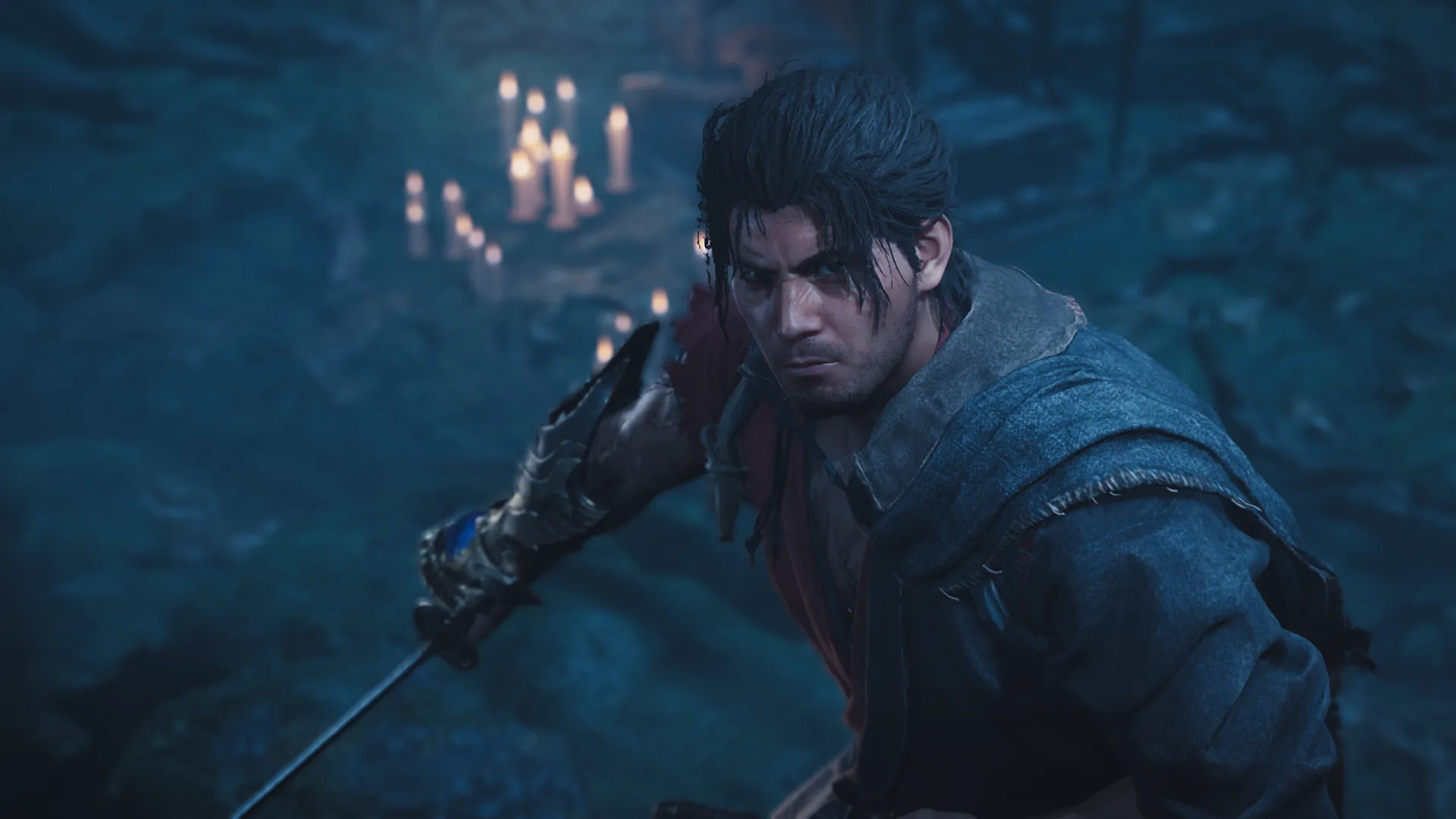
Onimusha: Way of the Sword stars Miyamoto Musashi, a samurai obsessed with strength, winning duels, and becoming the strongest swordsman around. After a brief encounter with some Genma, the demonic enemies of the Onimusha world, Musashi gains a mysterious Oni Gauntlet that imbues him with the strength to fight the demonic hordes descending onto Kyoto. One thing I really loved about Musashi was that he wasn’t afraid to get a little silly. There are several moments in the game where humor really gets to shine through. This is most notable in the opening sequences and one particular conversation about how to use a boat. While humor is present in the game, it never is overdone or comes across as silly. This is still very much a story about a samurai on a quest to save a town from evil.
Musashi isn’t alone in his adventure. Way of the Sword introduces several key characters that provide insight, assistance, upgrades, plot progression, and sometimes all of the above. There’s the mysterious spirit living inside your gauntlet. You meet a giant of a man living in a shrine, also mysteriously with a gauntlet of his own. Then there’s a headstrong young dancer on a
mission of her own. There’s a mysterious story teller, on the hunt for new tales to tell. And then there is Ganryu, Musashi’s rival in chasing the greatest swordsman dream. Each character felt fully unique and fun, even with a bit of cheesy dialogue sprinkled throughout.
Brave Fencer Musashi
Onimusha: Way of the Sword shines brightest with its combat. One of my greatest fears was that after so long, Capcom would try to shoehorn the Onimusha franchise into a Soulslike template, since nowadays it’s so easy for games to go that route. I’m thrilled to report that this entry is, in fact, an Onimusha game! While part of me misses the classic tank controls of the Capcom games of yesteryear, in all the ways that matter, this is very much an Onimusha game. So, let’s talk about the most important aspect of Way of the Sword – the combat.
Musashi is given a lot of different ways to handle the Genma hordes. He has two basic attack types – a quick, weaker strike, and a more powerful two-handed chop. Both can eventually be upgraded to be able to charge up for a more powerful, wide arc version. Musashi also gains access to a spiritual bow, thankfully without an ammo count, that can be used to snipe enemies from afar or to disrupt Genma Rifts. In true Onimusha fashion, Musashi also eventually gains a stable of Oni weapons with various effects. My personal go-to was the first one you stumble across.

This is a set of twin daggers that unleash a flurry of attacks that extract vital yellow souls that replenish health. These were a godsend in many of the more difficult boss battles. They allowed me to both damage and heal simultaneously without having to stop pressing my attack to pop a health item. Others include twin hammers that decimate enemy stamina, a flute that summons fire inflicting birds, and several more.
“Musashi can either activate a one shot kill on a regular enemy or a huge strike against a boss”
On the defensive side, Musashi has several options. This is great because defense often wins fights in Way of the Sword. If you don’t become intimately familiar with all of these, you’ll quickly find yourself banging your head against the brick wall of a tough opponent. The most important of these is the parry. Parrying not only builds up your Blazing meter, which sets your
sword aflame when activated for enhanced attacks, but it’s also the best way to counter and break down your opponents stamina bar. It is also the only way to beat back an enemy’s glowing pink attacks.
The stamina bar is the most important bar to focus on in a fight. Musashi’s strikes will always chip away at the enemy’s health, but by draining their stamina bar, Musashi can either activate a one shot kill on a regular enemy or a huge strike against a boss that either decimates a chunk of their health or does less damage but also grants a deluge of souls to extract. Either way, depleting an enemy’s stamina bar is key to winning difficult fights.
“Musashi can counter at the right time to reverse the throw”

Musashi also has a dodge at his disposal. If timed right, a Perfect Dodge activates, completely negating any damage and repositioning you at the back of an enemy for some free hits. It also builds up a dodge meter that, when full, can be used to unleash a quick flurry of blows ideal in breaking enemy armor. There’s also the Throw Reversal. When an enemy glows blue, Musashi can counter at the right time to reverse the throw, deal significant stamina damage, and open the enemy up for a few free strikes. And since enemy throw attacks can be absolutely brutal on your health bar, it becomes a very key tactic to employ.
Musashi gains the ability to break an enemy’s guard as well. So if an enemy begins blocking, or employs a shield, or enters a Counter stance, the Guard Break smash will hit them hard. This leaves them reeling, and once more open them up for a counterstrike. Finally, there are the Issen attacks. These are a lot rarer to see, at least for me, because the timing is so strict and it becomes a full on all-in risk and reward scenario. By timing your own strike right before an enemy hits you, you counter with a blindingly fast strike that deals significant damage. But if you mistime it even just a little, you lose the chance to block, dodge, or parry, and will suffer the full force of the attack.
“Despite its difficulty, the game removes almost all barriers or frustration regarding death”
If all of that sounds like the game is difficult, it’s probably because it is. But it’s difficult in a very fair way, I felt. Enemies never felt cheap or unfair, I just hadn’t learned their patterns or tells yet. Every loss left me with a better understanding of their mechanics. I never felt like it crossed into true Soulslike territory, but it certainly isn’t a cake walk. The game offers two difficulty choices: Story and Action. I never tried out Story mode, but Action really felt like the perfect balance. Every time I finally triumphed, I was left with such a feeling of accomplishment hat I hadn’t experienced in a bit.
Despite its difficulty, the game removes almost all barriers or frustration regarding death. When you die, the it lets you click a button a resume the fight right at the start. No runback sequence. No loss of items or durability of equipment or any of the other issues that plague other difficult games. Way of the Sword wants you to triumph over its fights, not give you a slog to suffer through just to try again
Packed With Content

The progression of the game flows pretty well. There’s a semi-open world Kyoto to explore in between large story missions that take you offsite. This Kyoto gradually expands as the story progresses, allowing you to explore more, find new hidden chests and items, and engage in more quests. The offsite missions take place in a more linear fashion, but with tons of combat and loot to find. As Kyoto opens up, there becomes more and more to do. Musashi gains access to side quests, smaller tasks from civilians, spirit dogs to rescue, Rifts to close, Oni powers to expand, and more. Even though it isn’t nearly the largest open-ish world, it’s fairly dense with things to find and enemies to fight.
One big downside is the overwhelming amount of resources you became tasked with obtaining. And the sheer amount of things needed to be upgraded. Red Souls extracted from enemies are the main source of currency, used in several different areas as payment for upgrades. Which is fine, that’s classic Onimusha right there. But Way of the Sword really ups the ante with the other currencies needed. Musashi can upgrade his clothing for more health and stamina. He can upgrade his sword for more damage. And he can upgrade his Oni Gauntlet for more Oni Meter and power.
“Load times were minimal if at all”
Each of these require their own currencies and resources, and each have way too many stages to level up to fully hit the max level. 10 stages each for clothing and sword, five stages for the Gauntlet, and so on. Each stage requires a crazy amount of resources. Then there are the Oni Stones and Power Stones, which are needed to level up passive skills, Oni Weapon skills, and other combat upgrades. It really is a lot to find, a lot to collect, and a lot to manage.
I played Onimusha: Way of the Sword on a base PS5 in Performance Mode. I’m not really one to clock FPS levels and obsess over them, so I can’t give the hard details if there any dips, but I never noticed them. Even in giant fights with tons of enemies, particle effects, floating souls, and more, it never really impacted how it ran for me. Load times were minimal if at all. And the game looked great throughout as well. All in all, this demonstrates an excellent job getting the game to do what it needed to do.
Verdict
At the end of the day, I truly enjoyed my time with Onimusha: Way of the Sword. Musashi’s journey was fun, and occasionally funny, but enjoyable throughout. I liked the cast of characters surrounding him and loved the combat mechanics. The boss fights, even when they were absolutely kicking my ass, were great. I loved the feeling of triumph when I won a difficult fight. I loved the feeling of ripping through a group of enemies, and standing there sucking all those souls into my gauntlet. My issues with the game were pretty minimal, all things considered. As a long time fan of Onimusha, I can confidently say that the team at Capcom knocked out a worthy addition to the series. Musashi is a fun and flawed protagonist, and his journey is definitely worth experiencing.
Score: 9/10
Onimusha: Way of the Sword launches September 4 on PS5, Xbox Series X|S, Nintendo Switch 2, and PC. Reviewed on PS5, review code provided by the publisher.