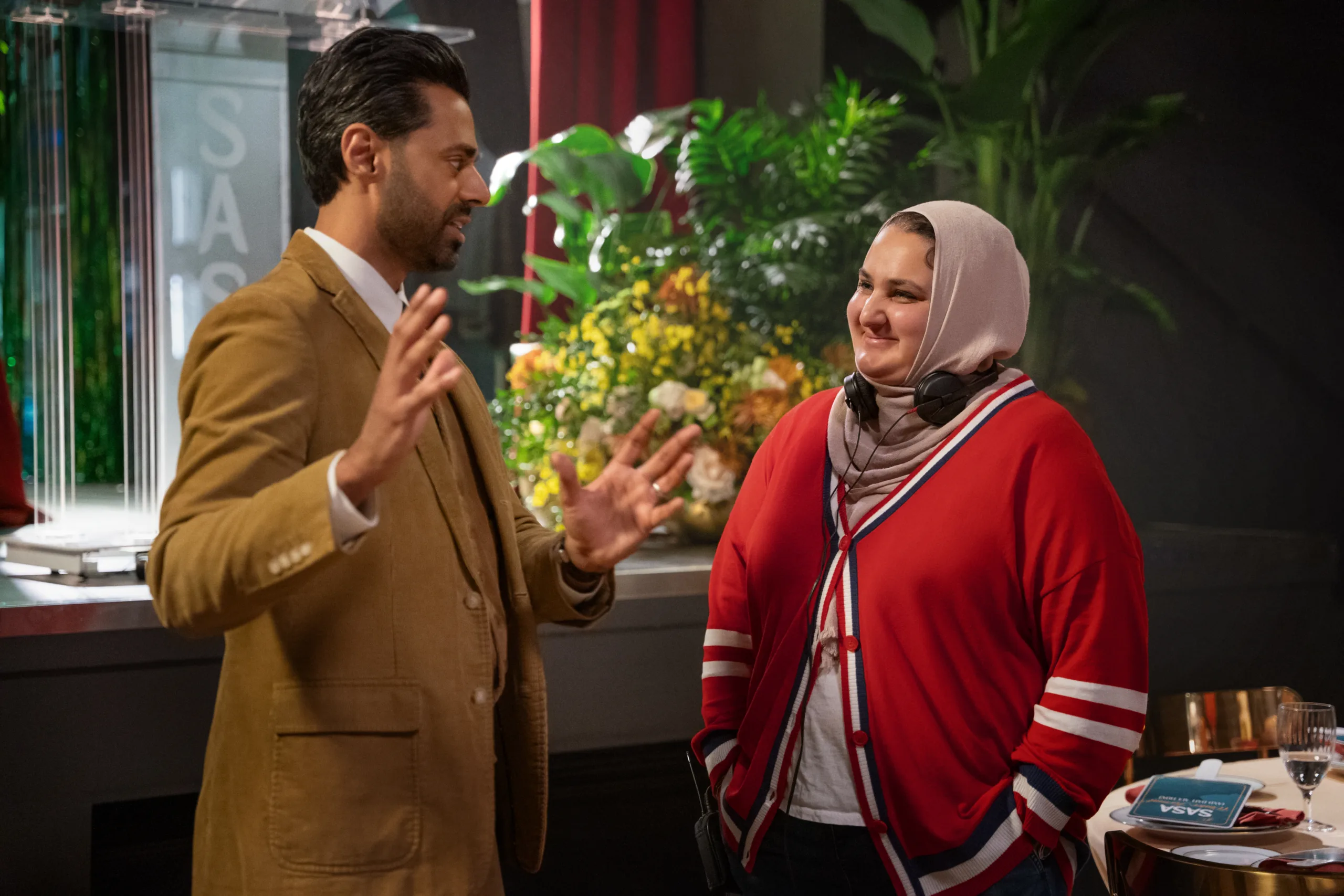
In her latest film Best Of The Best, director Lena Khan delivers a vibrant, emotionally resonant exploration of dance, culture, and self-discovery. Centering on a predominantly South Asian cast and showcasing a powerful fusion of classical and contemporary styles, the film shatters traditional Hollywood boxes to present a story driven by genuine human connections.
Recently, Khan sat down with Maria Akhtar to discuss the creative choices behind the movie, the profound chemistry of her cast, and her evolving perspective on cultural representation in the film industry.
Redefining Cultural Representation
For Khan, directing Best Of The Best marked a continuation of a personal and professional journey regarding how culture is portrayed on screen. Reflecting on her early career, Khan shared how many South Asian filmmakers initially internalized the idea that true success meant making a movie tailored strictly for a mainstream white audience, treating assimilation as the ultimate milestone.

With this project, however, Khan embraced a different mindset. She noted that when starting out, she and others thought that making a movie with a studio meant “you’ve made it, and that there was just how the, you know, when you were, that’s when you’re assimilated.” Moving away from self-imposed limitations, Khan realized that audiences genuinely want authentic stories. As she explained, “When you have something to offer that’s human and real, and a lot of that does come from our culture, it is a beautiful thing to be proud of, and people want it. They love to experience it.” She added that the film proves “we have points of accessibility” without needing to conform to a standard “white people movie.”
Building Chemistry On and Off Camera
The film’s palpable camaraderie is anchored by a talented young crew, including leads Mytreyi and Priyanka, who underwent rigorous training alongside choreographers Philip, Mackenzie, and Joya. Khan noted that physical proximity during intense dance training naturally dismantled the actors’ inhibitions. Describing the process, Khan shared, “You’re usually up in each other’s business physically… They’re coming out of each other’s crotch. They’re interlacing their arms, they’re like in each other’s business. So your inhibitions go down right away.”

Rather than relying solely on traditional casting tropes, Khan wanted the characters to feel fully formed and multi-dimensional. By assembling a predominantly South Asian cast, the actors were freed from the burden of acting as sole representatives of their culture. Khan highlighted this approach, noting, “When you have an all South Asian cast… everybody gets to be fully formed characters and not just, I like to say, they’re not just representatives of their culture.”
The Power of the Final Dance Sequence
One of the most iconic moments in Best Of The Best occurs during the climactic dance sequence, where the characters choose to perform entirely for themselves rather than seeking the approval of the audience or judges.
Khan intentionally utilized A.R. Rahman’s powerful South Asian music and classical Bharatanatyam fusions without heavy exposition or hand-holding. Explaining her vision for the ending, Khan noted, “There is a very important theme that is carrying through that we have to hit the landing, which is, is this a movie about people competing for the approval of everybody else or your own approval… So it is crucial that, at the end, when they are dancing, they are dancing for themselves and not for anybody else.” The scene culminates in a breathtaking silhouette shot framed by glowing smartphone lights, demonstrating that true affirmation comes when individuals stop competing for external validation and finally embrace their own authentic voice.
Looking Ahead
By blending high-stakes emotional beats, natural comedy, and breathtaking one-shot cinematography directed by Adam Carboni, Best Of The Best proves that stories rooted in specific cultural experiences can resonate universally. Khan hopes the film opens doors not only for talented new actors to secure mainstream leading roles, but also for South Asian musicians and creators to share their art with the world on their own terms. Summing up her ultimate aspiration for the project, Khan stated, “I would love it if we can… for the actors, but also the musicians… to enter the quote-unquote mainstream. I would love it if they are doing movies that flex their culture, but I’d also like them to be seen as actors in the same way others are.”
You can stream Best of the Best exclusively on Netflix.