
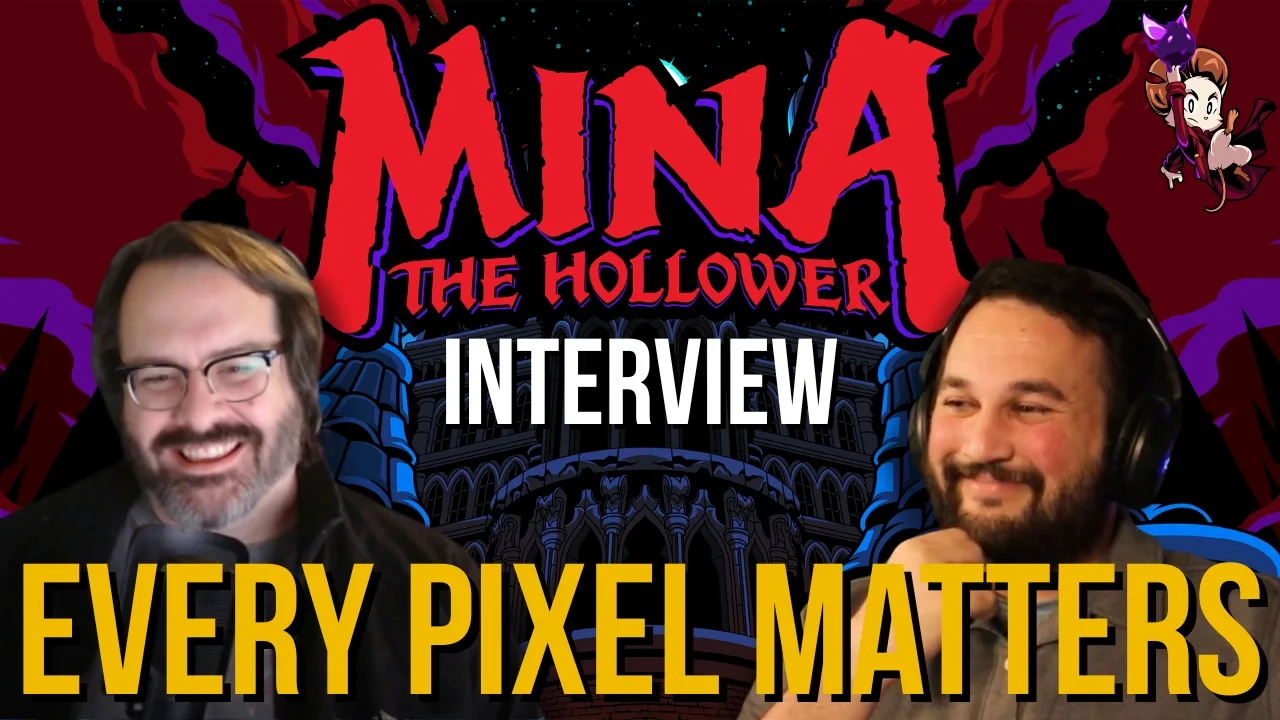
Following the success of Shovel Knight, Yacht Club Games is preparing to launch its next major original title with Mina the Hollower. Inspired by classic Game Boy-era adventures while embracing modern design philosophy, the upcoming game has quickly become one of the most anticipated indie releases of the year. In a recent interview with Temple of Geek, Nick Wozniak, Pixel Artist and Animator at Yacht Club Games, shared insight into the game’s artistic direction, gameplay systems, and the collaborative process behind its development. See the full interview below.
Building Yacht Club Games’ Next Major Game
According to Wozniak, Mina the Hollower became the studio’s primary internal focus after work wrapped on Shovel Knight content in 2019. While Yacht Club Games has remained active through projects like Shovel Knight Dig and Shovel Knight Pocket Dungeon, Mina represents the next large-scale original project developed directly by the core team. Wozniak explained that much of the studio eventually shifted onto the project, including developers originally working on an unannounced 3D title, as the team focused on polishing and finalizing Mina’s world and gameplay systems.

Modernizing Retro Gameplay
A major topic throughout the interview was how Yacht Club Games approaches retro game design. Rather than simply recreating older mechanics, the team studies why certain ideas worked and reinterprets them for modern audiences. Wozniak pointed to the game’s Spark system as one example. Inspired by older “lives” mechanics, the system allows players to recover dropped resources after death while still preserving tension and stakes during exploration.
That philosophy extends across the entire experience. While Mina the Hollower clearly draws inspiration from classics like The Legend of Zelda: Link’s Awakening, the team also wanted to remove frustrations that no longer benefit modern players.

Pixel Art, Animation, and Visual Design
The interview also explored the complexity behind the game’s retro-inspired pixel art. Wozniak discussed how even tiny changes, sometimes involving only a single pixel, can dramatically affect readability, emotion, and player perception. Because the game intentionally embraces a Game Boy-inspired visual style, the team often communicates emotion through subtle movement and carefully framed animations rather than large cinematic sequences. Combat animations, environmental readability, and color contrast all undergo constant iteration throughout development.

A Collaborative Development Process
Wozniak emphasized how collaborative the studio’s workflow has been throughout development. Enemy ideas, gameplay concepts, and visual themes are often brainstormed collectively before evolving into finished mechanics or designs. That collaborative process, according to Wozniak, helps ensure the game feels cohesive across gameplay, art direction, and player experience. One aspect Wozniak is especially excited about is hearing players share their own stories once the game launches. From weapon choices and Trinket combinations to exploration order and secrets, Mina the Hollower is designed to encourage experimentation and discovery. For the full conversation about retro game philosophy, pixel animation, and the making of Mina the Hollower, be sure to watch the complete Temple of Geek interview with Nick Wozniak.
Mina the Hollower launches May 29th on PlayStation 5, Xbox Series X|S, Nintendo Switch, and PC via Steam.
Be sure to join our Discord for discussions about video games and more at Temple of Geek.


One thought on “Mina the Hollower Interview | Nick Wozniak on Pixel Art and Game Design”