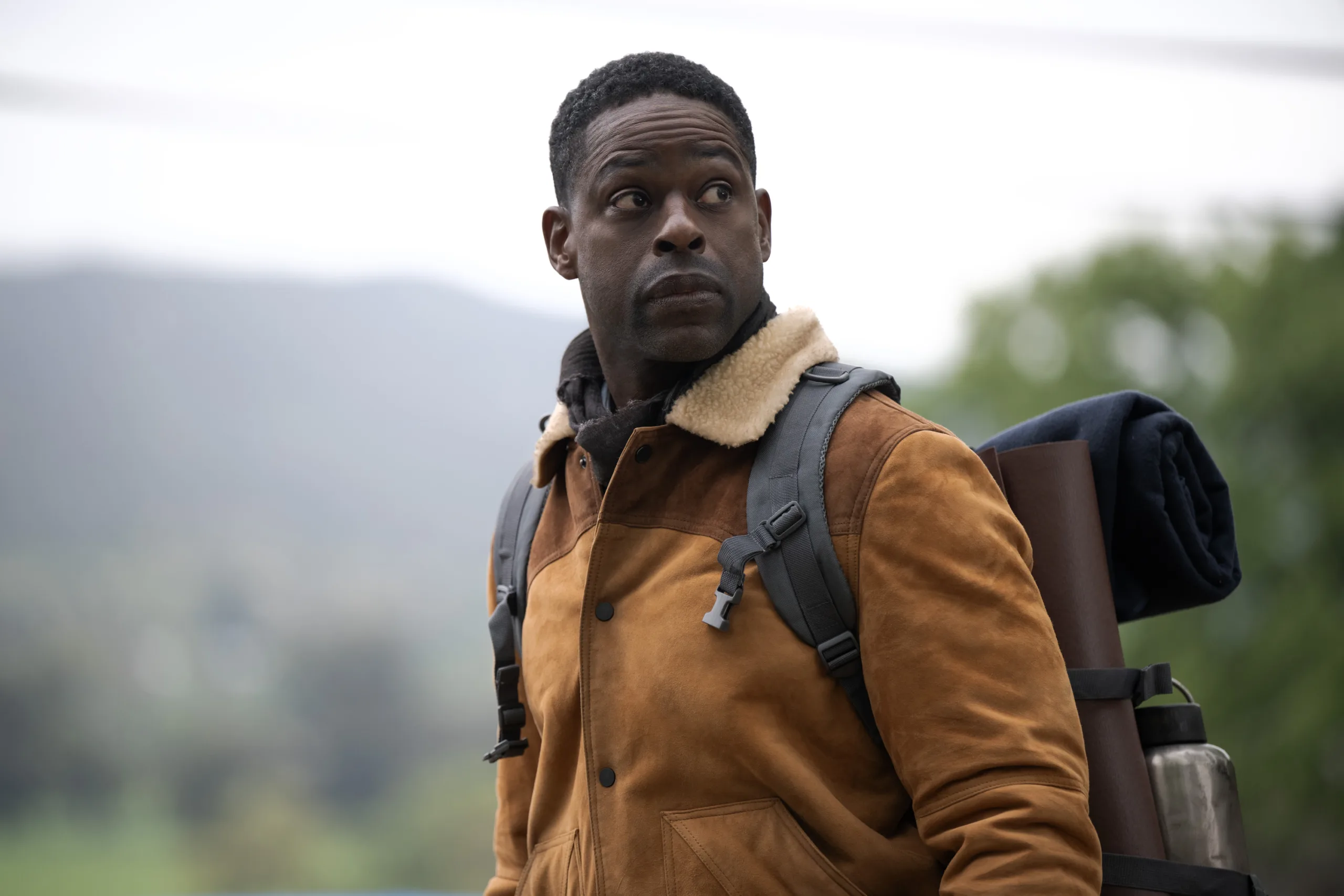
In the second season of the series Paradise, the narrative shifts from the privileged, sheltered bunkers of the first season to the unforgiving reality of a post-apocalyptic surface world. This transition required a fundamental change in costume design to reflect a world defined by communal trading, survival, and the preservation of individual identity under extreme conditions. Costume designer Coxy developed character wardrobes from the ground up, moving away from typical dystopian tropes toward a more grounded, realistic aesthetic where practicality is paramount.
In a recent interview, Suhaila from Temple of Geek speaks with Coxy, the costume designer for the series, who breaks down the process of building character wardrobes from the ground up. They discussed the intricate aging process, where “every hole is a planned hole.” They also explored how Xavier’s journey to Atlanta is etched into his clothes and how the shifting power dynamics in the bunker have evolved the fashion of those left behind.
The Intentionality of Decay
One of the most striking visual elements of the season is the “lived-in” quality of the clothing, which Coxy describes as a “timeline of destruction.” Rather than simply applying dirt to garments, the team used an intricate aging and dying process to ensure every piece felt as used and weathered as the person wearing it. Under the philosophy that “every hole is a planned hole,” the placement of every tear and stain is intentional, matched specifically to the character’s movements and history of injuries.

To maintain environmental accuracy, fabrics were treated with specific pigments to reflect their surroundings, such as the red clay of rural areas or the grey soot of urban Atlanta. The team further focused on functional aging, researching how materials like denim and wax jackets would naturally break down over years of exposure to the elements.
This aging process also takes into account the lack of modern amenities like electricity and laundry. In the early phases of survival, characters are depicted with increasingly dirty clothing because they are focused solely on staying alive in the cold. As the seasons change and the sun returns, the costumes reflect a different kind of wear: the salt stains and fading that occur from washing clothes in rivers and hanging them to dry in the sun. This attention to detail ensures that the wardrobe evolves alongside the environment, becoming crispier and more used as time passes
Paradise Season 2’s Wardrobe is a Map of Trauma
For characters like Xavier, clothing serves as a physical map of his traumatic journey toward Atlanta. The costume team maintained multiple versions of the same outfit at various stages of ruin to reflect specific events in the script. For instance, if Xavier is robbed, stabbed, or involved in a crash, his clothes reflect those precise moments of struggle. This visual storytelling tracks his progression from a methodical, tactical background to a survivalist adapting to the surface, where he might wear borrowed rural gear like wax jackets before returning to a more tactical mode for the story’s climax.

The physical toll of Xavier’s journey is even etched into his signature gear, such as the tactical evolution of his flight suit. As he moves through different environments, from the “crashed” outfits of early episodes to the items he acquires at the Atlanta swap markets, the audience can visually trace his movements and the hardships he has endured. This collaboration between the costuming and set departments ensures that the clothing feels like a seamless part of the world-building, where even a crafted baby sling made on a paddle sewing machine tells a story of survival and necessity.


Identity is Scarce in Paradise Season 2
A major theme explored through the costumes is the persistence of individual identity even when resources disappear. Coxy emphasizes that getting dressed is always a personal statement, and even in extreme survival scenarios, people make choices that reflect their personalities. In the urban hub of Atlanta, survivors gather at swap markets to trade for items that maintain their humanity.

This is exemplified by characters like the “Cancer Cowboys,” a motorcycle group that maintains unity through custom-made suspenders and hand-drawn nuclear patches while still allowing for individual touches. Similarly, the presence of a drag queen in an ensemble made of metallic scraps serves as a beacon of diversity and inclusivity forming within the ruins.

The Cancer Cowboys specifically use their clothing to signal both their “bad news” reputation and their underlying identities as a group of technical experts or “nerds”. While they arrive in dark, dirty colors to appear intimidating, their individual pieces reveal more: Link wears plaid shirts that hint at his background as a computer genius, and Geiger wears a vest featuring hand-drawn patches representing every power plant he has shut down. Even when the group tries to dress up for dinner by borrowing items from Elvis’s wardrobe, they choose pieces that align with their skills, such as the mechanic of the group naturally gravitating toward Elvis’s mechanic jacket.
The Shifting Dynamics of the Bunker in Paradise Season 2
While the surface world struggles with environmental decay, the wardrobe within the bunker reflects a dark political transformation. Following a revolution, the once utopian vibe has shifted toward an authoritarian atmosphere. This is signaled through tactical, intimidating uniforms for security forces and a drained, muted color palette for civilians that represents the “bursting of the paradise bubble”. Because the bunker was not designed for incarceration, the regime “recycles” green worker coveralls from the construction era for prison uniforms, though inmates poignantly retain their own civilian shoes.
This internal shift is also reflected in the bunker’s leadership, where fabric choices are used to communicate changing power dynamics and personal vulnerability. The leader, who was once seen in structured, “armor-like” power suits, transitions into softer silks and cashmere during the second season. This change in fabric reflects her physical recovery and a growing sense of vulnerability as her secrets are exposed. By using “rosy blush” matching suits and delicate materials, the costuming team masks her villainous nature with a layer of humanity and femininity, challenging the audience’s perception of her role in the new world order.
You can stream Paradise Season 2 on Hulu.