
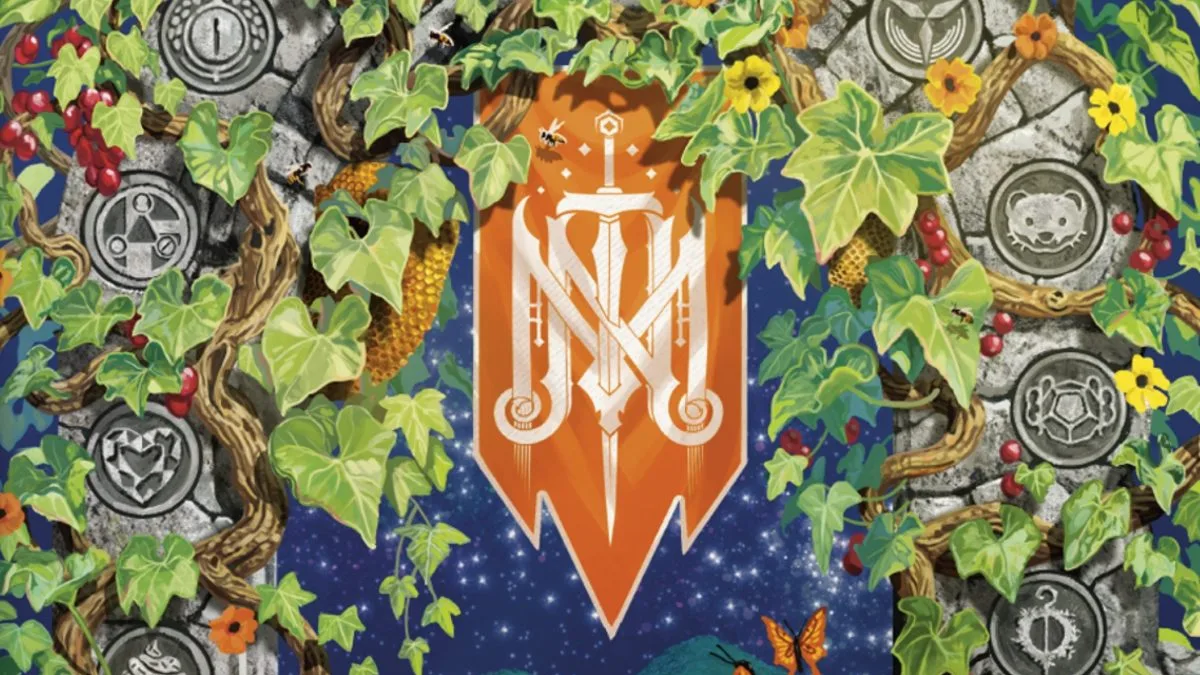
Critical Role has introduced some truly renowned antagonists, including a conclave of dragons, gods, and mages. One such iconic antagonist is Isharnai, a hag who has been manipulating the threads of Exandria for years. Isharnai, introduced in campaign two, had a finger on the scale of many lives, including multiple members of the Mighty Nein.
“Critical Role: The Mighty Nein – Stories Untold” more thoroughly explores her mindset and perspective specifically after Jester outwitted her. Isharnai remained largely a mystery, having only one notable interaction with the Mighty Nein as they bargained for Veth’s freedom. However, the short story “Delicious” shows how this short interaction impacted her, more so than even she would have expected.
In an exclusive interview with Temple of Geek, Kiri Callaghan breaks down her approach to writing Isharnai. She shares how the collaboration process with Critical Role worked, including the logline she was given for “Delicious.” Callaghan also reflects on how misery and joy were at the heart of the story.
Kiri Callaghan Was Influenced By Baba Yaga & Yelena Belova

Temple of Geek: So what were you most wanting to focus on with Isharnai in the aftermath of the iconic cupcake moment? Obviously the misery aspect, but just to me, the loneliness was interesting too.
Kiri Callaghan:
Well, thank you. Because that was the thing that they’re like, “Okay, let’s meditate on what that means.” And a huge thing for me in that of, I think one of the best tools a writer can ever have is cognitive empathy of why does this person do what they do? Even if you’re not emotionally empathizing, you’re able to go like, “I understand.” Pardon my French, but no actual person is like, “I did it just because I’m a bitch.” That’s not a reason. That’s not a reason. There’s some internal logic of why you did that. And the idea of, well, if you’re a creature that is fed on misery, then some part of me has to believe you don’t actually know what that means. Because you’ve never felt it.
A weird, almost flavor-taste thing of, “Oh, I assume this tastes like this because I’ve never actually had this. And the only way you can never feel misery is if you’ve never actually felt joy, actual joy, and that safety and companionship. And that might’ve been the first through changing memory as fake as it was, it reminds me almost that moment from the MCU with Yelena of it was real to me. It almost doesn’t matter that it wasn’t real because the feeling was real. And that idea, I found that such a, not to be a little trite, but so delicious of an idea of just what if you have this being who has thrived on misery forever, finally getting a taste of what causes misery because you can’t have misery without that feeling of losing something. And I think that’s the first time she’s truly felt lost and understood what misery is and not having the tools to cope with that.
I love how much Matt took that. I got to speak with someone else about this and they were like, oh, it’s interesting how she was lying in the thing about wanting to be her friend. I don’t think she was. I think she believes that’s what it is because she doesn’t have the tools to understand what friendship is. All she knows is I had this feeling. I want that feeling back. I need to possess that feeling so that feeling can never go away. The whole idea of betraying her coven before they betray her, I’m going to lock them away so I never lose it. And this idea of almost a fear of change and an inability.
I also find that always fascinating for immortal creatures of sorts or creatures who live for a long time is because nothing, they almost stagnate because they’re not constantly faced with this very human idea of death and rebirth and everything must change. It can’t stay the same. And I’ve lost my original point, but I think that was such a huge thing for me of I really want to explore this. And I don’t know. And kind of just, yeah.
Temple of Geek: How did you approach not only finding Isharnai’s voice but her mindset as well? Because I really liked that in this you pulled back the curtain of the witch or hag trope that we always will get.
Kiri Callaghan:
Oh, thank you. Part of it was just listening to Matt speak as her alot and just go like, “Okay, let’s. All right.” And all the weird mouth sounds he makes as that character and the breathing and just going, “Okay.” But one thing I love about them. I know that Exandria is its own thing, but the way the Forgotten Realms also approaches its Hags and this idea of you were so nasty that the Fae realm threw you out. And really playing on the idea of Grimm’s fairytale versions of Hags where I love how they’ve got auntie and granny as terms of affection, but also to show how powerful they are in their own hierarchy is fascinating to me.
And really just getting to play a little bit. I love folklore and witchcraft. I’m a practicing witch in my own right, but obviously not in the way Isharnai is. No. But then I got to bring things in, the whole thing with breaking the anchor for Veth’s curse and the idea of using blackthorn and that blackthorn itself is also usually, that’s legitimate. The folklore around blackthorn usually does involve protection in this and the fact that she is getting to play with that and twisting its own, how do you twist how this could be used for good?
And just how that finding different ways of not necessarily looking at it in a lens of good or evil, but just very much going back to that idea of I don’t believe there’s anything as evil magic. I don’t even think even in necessarily what they have going on there, but you have how people use it. So that was a really important thing as well to get to play with because that also feels very folklore based of if you go back to the older fairytales, sometimes you have things that are like, “Ah, this is just evil.” But a lot of times it’s about it’s not evil, it’s how people interacted with it.
And it’s almost usually humanity that would decide that because you had these folklore that would act as sort of morality lessons. Bobby Yaga is a very famous Hag in folklore. And depending on the story, she’s either like, “I’m going to eat you,” or that’s a threat she can do potentially, but she might also give you wisdom if you prove yourself worthy of it. And I’m always way more interested in that than I am anything that’s just one or the other. I’m like, “That’s not real. That doesn’t exist. Evil’s an action. It’s not a noun.”
Temple of Geek: A friend of mine has been getting me into horror for the last couple years because I’ve been a scaredy-cat forever. But it’s a conversation we’ve had of horror is our generation’s version of fairytales with the morality. So I love that because this feels like that vibe.
Kiri Callaghan:
Yes. Honestly, that’s the horror I enjoy. Anytime that, and it’s almost always American horror that does it. Anytime American horror goes, “Nah, we’re going to throw that out the window.” I’m like, “No, don’t want it.” I’m also a big scaredy-cat, but my wife loves horror films and she’s been slowly getting me into it. I’m like, “Okay, okay. The jump scares get me. That’s my big problem.” It’s not new now, it’s been around for a while, but The Nightmare on Elm Street that was newer. And they revealed, because you think, “Oh, he was falsely accused and then they killed him.” And I was like, “Cool, cool.” And then you find out, “No, no, he was actually hurting these children.” And I’m like, “So you’re telling me this is a world where someone does that. This is not just the human society, but this is the karmic, magical, supernatural law of this world where someone who does that can be killed and then he can come back and continue to torment his victims? No, f-ck you.”
That to me felt like I hated that so much. I was mad for days because I’m like, “This feels like this violates so much of what, to me, horror should be,” is that idea of, not like it’s like, “Oh, if you’re good, you’re fine.” But there are certain. It does feel very fae to me of there are certain rules and if you break those rules, it just feels like you’ve been cheated or I don’t know. We’re big on the law of hospitality in my house of this idea of if you invite someone into your home and they’re your guest, then you have certain responsibilities as the host, and they have certain responsibilities as the guest. And I sort of feel that way whenever I go into a movie theater. And when a movie does certain things where I’m like, “Ooh, that just feels like you violated this trust in a way that doesn’t feel like you served the story. It just feels cheap and gross.” So I completely understand. We’re like, “No, no, no. No. No.”
Kiri Callaghan Reveals The Creation Process Of Isharnai’s Coven

Temple of Geek: We talked about how much you got to craft the coven and the dynamic. What was your thought process with that? Because I love that it’s not like Isharnai and her minions or anything, and it’s not even them against Isharnai. It’s this push-pull between all of them. When one seems to begin to have the upper hand, the other one’s like, “I’m going to cut you off at the knees; even though it doesn’t help you, I’m going to do it.”
Kiri Callaghan:
Yeah. I think it was in my original outline, the idea of, because they only wanted one hag. Isharnai could be the only hag. And so this idea of you’ve got these very different mindsets and almost, I think somewhere in the original outline, I’ve put crabs in a boiling pot, pulling each other down. I know that if I let you get out, I can also get out, but f-ck you. And how would that work? And playing with the idea of you’ve got very different magics from three very different mindsets, and how when they work together, my God, they must have been terrifying because you’ve got such different backgrounds coming at you. But then inevitably those three different viewpoints are going to cause a schism.
It probably would have broken up if Isharnai didn’t move first. It might not have ended this way. But again, I think it’s that idea of I don’t want to let go of what this currently is. And so I want to keep all that power for me. And that means basically imprisoning you two and ruining our agreement before I really have cause. I’ll get you before you get me. But because he’d given me life and death for those two, I thought it was going to be fun to differentiate their voices and also that viewpoint of you’ve got, okay, life and growing. And specifically I think he described it as,
I don’t remember exactly, but the general idea of nature’s vicious will to survive rather than nature. And I was like, brilliant. I love that idea of something that’s almost like, we described her as a feral poison ivy when I first pitched her. Of that idea of like, all right, let’s go. But especially because they’re in that weird little liminal space, really playing with the idea of one talks in future tense almost constantly and the other talks only in past. And sometimes they’re able to meet Isharnai in the present, but that idea of growth and moving forward and the death and no longer remaining and just kind of separating their voices that way was a lot of fun.
Temple of Geek: It’s so great. It’s so great because it’s that moment where you’re like, oh, she’s going to get convinced. And then she’s like, nope. It’s so fun. Because I remember reading it, it just took a second pause. I was like, wow, what a dick move in such a fun way. Because it’s not even like it helps her. She’s just like that.
Kiri Callaghan:
I’m just like, f-ck you. But also still holding that grudge of, yeah, if they work together, maybe they’d both get out. But I think there’s also just so much trust has been ruptured at that point of you’ve got our lovely witch of the wilds essentially being like, Dude, I see what you’re doing trying to convince her right here. I also see that you happen to be leaving me out of it. And just like before, how you seem to suggest to her that I was the problem and that I needed to be taken out. And you take zero f-cking responsibility for that. And when I called for you, you didn’t come to my aid. And so it’s kind of like, I see what you’re doing. F-ck you. No, no. Even now you’re still trying to screw me over and I see it and I’m not going to let you do it. I’m certainly not going to let you get out of here because this is the bed you made, bitch. This is where we go.
Temple of Geek: One of my favorite things that Critical Role has explored about Exandria is the pantheon, because I think they’ve done such a good job of exploring gods and not making them feel human. I felt like that with Isharnai in this because it was this thing of she doesn’t get it. She doesn’t get the human side of any of this. It’s not a thing where she’s just like, I’m mad Jester did this. She’s like, I don’t totally understand what happened. It didn’t go great for me. I want the blue one because I think I’ll feel good again. The fact that that’s how her mind works is so cool because it’s this thing where there’s a very human aspect of it, where it’s like, “I want to feel that feeling I had,” but there’s such a non-human aspect of, “I’ll just take it.”
Kiri Callaghan:
It’s a disconnect and almost, I think you could almost say it’s almost a childish thought of when you don’t have those skills or that understanding where you can’t. Because in a way it would be very like, okay, you haven’t been able to grow in this way. So you are kind of an infant when it comes to emotional maturity and that idea of you don’t know. So you’re like, all right, have thing. Thing gets result. Yes. I think one of the great things that you can do, and it’s honestly one of my favorite things when working with supernatural creatures, is I think humanity is so f-cking cool. I think we are capable of such awesome, awesome things, also terrible things. We do contain multitudes, but I think because we are these brief things just burning our candle at both ends with such a short amount of time and just driven by passion and feeling, and I think an interesting way to celebrate and really highlight, isn’t being human kind of awesome? Showing this idea of if you didn’t have to worry about dying or if you had instant gratification all the time, how much would you be actually missing out?
Temple of Geek: Yeah.
Kiri Callaghan:
Because then there’s certain things they’ve shown time and time again, you learn the most when you make mistakes. If you have instant gratification constantly and you’re like, oh, I just make it appear and I’ve got the thing, and you didn’t work through it at all, you’ve learned nothing. So much of you is just in that stage of infancy weirdly. And I find that very fascinating. And also, I mean, you look even at Greek gods, Greek mythology of they’re so human and at the same time they’re such children. And of course they are. Of course they are. Zeus is rarely ever held accountable in any of his mythologies. I think it happens once and it’s very briefly, and then poor Hera is put up and yeah, it’s bad.
Kiri Callaghan Explains Isharnai’s Thoughts In The Aftermath Of The Iconic Critical Role Cupcake Moment

Temple of Geek: It was so cool to see that because I think it is really interesting to have a character that has this immortal aspect to her, but we’re seeing her experience things for the first time. You convey that so perfectly in this because it’s something that I wouldn’t have necessarily thought about: What does it mean to feel joy for the first time and instantly lose it and then be told, “Hey, maybe it also is a lie”? And to have that be the core of the story. So it’s so cool to see that with this immortal character. And then it snowballs into her questioning what her whole life has been. Is this the first time you think she’s really thought about what she’s done to other people with these deals?
Kiri Callaghan:
Oh, 100%. At this point, it doesn’t seem like anything had really come back to fight her before. So it’s like when she makes a deal with somebody, at least as I understood it, it’s the idea of you can’t come attack me, essentially. We’ve got a deal. That’s a fae contract that’s like, you can’t break that contract. They could have attacked as a unit, but that idea of we made a contract, you can’t break the contract or that’s going to end worse for you. And that idea of it’s never really come back in a way where like, oh, you got careless. This really came back and bit you. And that constant telling yourself of, it’s not like I forced them to come here. They came to me. And it felt so self-absolving of that idea of I didn’t do anything. They come to me. I don’t force them to do this. And I found that fascinating. I think she’s so cool. I love her.
Temple of Geek: It’s like “Poor Unfortunate Souls” with Ursula where it’s like – Yes. I wrote a contract; you signed it.
Kiri Callaghan:
Yeah! You didn’t have to come to me. You didn’t have to sign my contract. So I’m not a bad guy here. This was consensual, which really does kind of blur the end. I’m like, eh. But then in that sense with Veth, because it was a thing for. It wasn’t a deal she made with Veth, it was a deal she made with the goblin chieftain. So it’s like, ooh, you found something. And it’s probably not the first time something like that has happened, but I think it might be the first time someone was able to come back and rise up against it. Because I sort of feel like she might’ve been better prepared if it had been something that had bit her in the ass more.
Temple of Geek: Especially because we get more insight into the deal with this than we do in the comic. And it’s in this moment that you chose to make it worse. The chief deal was basically like, “Hey, we want to punish her.” And she was like, “Ooh, I have a great idea. This is going to be super.”
Kiri Callaghan:
Make her suffer. Great. Okay. I love suffering. And that idea of, oh, so not only were you fulfilling a deal, you saw a chance to create some good misery there and I’m going to really feed on this forever. And it was like. Ooh, did we get a little greedy? Maybe. I don’t know.
Temple of Geek: There’s so much there. Especially because she is kind of this immoral being where there’s been so much that we just don’t know and haven’t seen with her. And the fact that this is the first time a deal has come back to bite her. That’s fantastic.
Kiri Callaghan:
Right. She’s in the middle of nowhere. And I feel like if most of the time people are making deals on behalf of themselves, it’s like, “Well, I did get myself into this, I guess.”
Temple of Geek: Yeah. I mean, Beau’s dad is a good example because it’s like, “Hey, you’re not great in the aftermath of this.” He’s like, “I don’t know, man.”
Kiri Callaghan:
It’s so interesting. That was such a fun thing to play with. And then following, trying to remind myself, okay, what happened with Beau’s dad? Oh, right. And that idea of his almost becomes a self-fulfilling prophecy of, dude, you became so paranoid about this that you absolutely brought this on yourself. There is a chance maybe this wouldn’t have happened or maybe it would’ve happened another way. I don’t know. I don’t like the idea of fate because I think it’s boring. But I do love the idea of, ah, was this a curse that this was going to happen? Or was this a matter of her being like, ah, I can see what you’re going to do with this and this is absolute. You’re going to ruin this for me.You’re going to make your own misery. I don’t have to do sh-t.
Temple of Geek: She’s like, I’ll just hurry it along a little bit. It’s fine.
Kiri Callaghan:
Just like, it’s fine. Just a little paranoia and insane.
“Critical Role: The Mighty Nein – Stories Untold” is available now. The book includes stories written by Betsy Aoki, Kiri Callaghan, Dani Carr, Mae Catt, Mike Chen, Rin Chupeco, Nino Cipri, Nadia El-Fassi, and Chase K with a foreword penned by Taliesin Jaffe.


