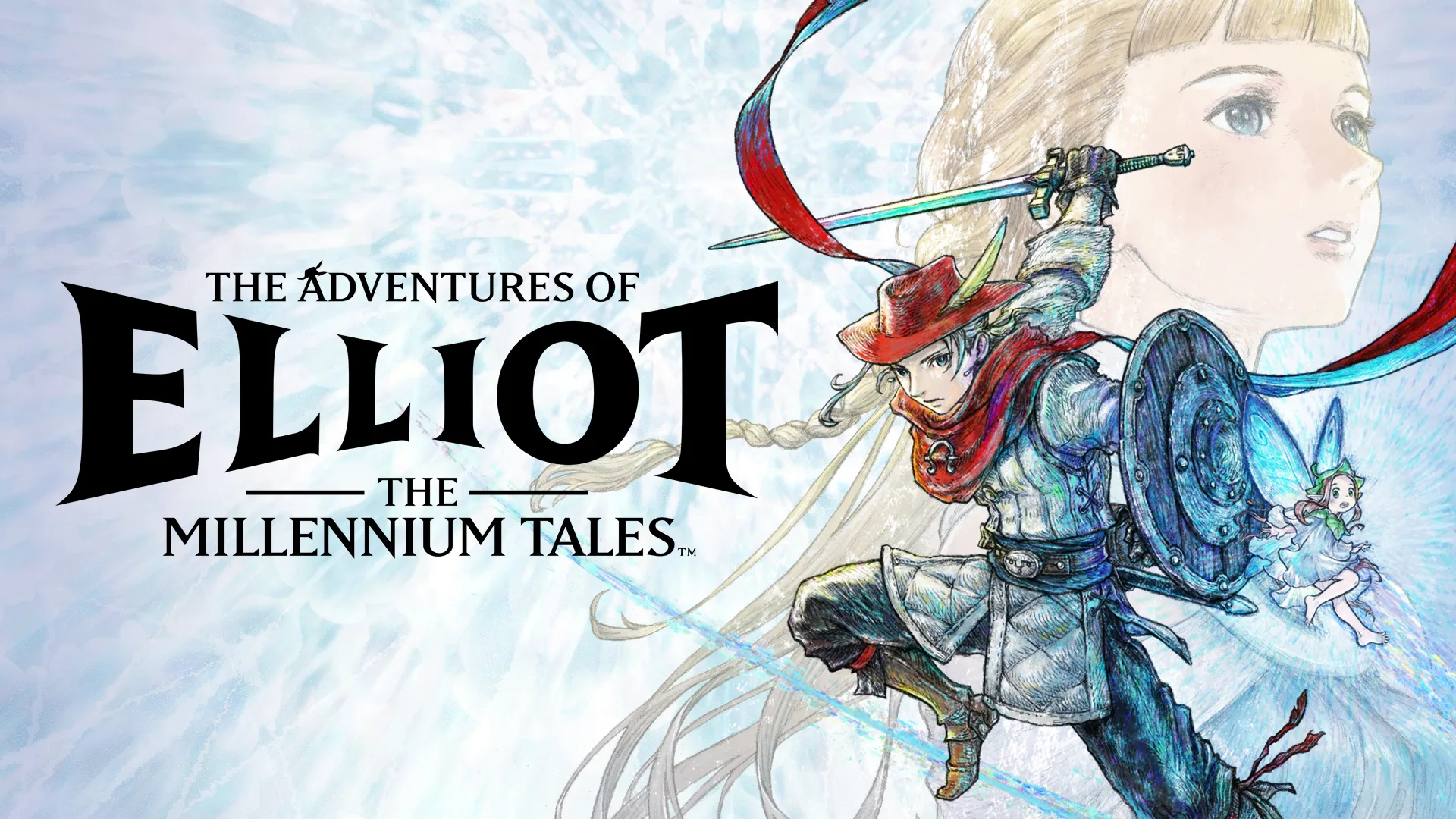
Square Enix’s popular HD-2D art style isn’t the newest gimmick on the block, but I’m happy to say the novelty hasn’t quite worn off for me yet. As a product of the SNES era and its pioneering JRPGs, this visual style really speaks to me. I still often find myself returning to the original Final Fantasy titles and Chrono Trigger to recapture some of that magic. But when the Japanese developer announced The Adventures of Elliot: The Millennium Tales, a real-time action-RPG in a brand new world, I had admittedly set my expectations somewhat low.
Not that I thought Elliot would be a bad game; every HD-2D outing Square has released has been some of my favorite games when they launched. But I had previously reported that Elliot takes direct inspiration from the Game Boy title Final Fantasy Adventure. This worried me slightly, as I don’t believe those spin-off games have aged well. But Elliot met and vastly exceeded my expectations, and quickly quelled all doubts I had of its quality. Its Final Fantasy Adventure DNA is at the forefront of its design, but with modern sensibilities and mechanics, the end result is one of the year’s best games.

A Moment in Time
My roughly 20 hour playthrough kept me hooked throughout. I won’t delve into spoilers in this review, but I can reveal there are three different endings. Seeing the true ending involves completing quests in a certain order and listening closely to the dialogue. Not all of your objectives will have a quest marker on the map, so knowing what characters are doing and where they reside is paramount. I appreciate this lack of hand holding in Elliot. It reminds of the endgame of Chrono Trigger, where many of its story beats and powerful weapons are completely optional. You have to know where to look.
The opening hours are fairly linear. You’ll play as the titular adventurer Elliot as he’s summoned to Huther Castle to complete a task for the king. What follows is a millennium-spanning tale of love, loss, and the importance of tolerance. And while the story is interesting, I wish Team Asano had taken better advantage of the time travel mechanics. It seems like a bit of a thrown in afterthought, or a way to just make the map feel bigger.
A couple hours in I met Faie, a tiny but tough fairy companion. I equate her somewhat to Navi from The Legend of Zelda: Ocarina of Time in that she is, in fact, quite annoying. But she’s useful in combat and exploration; she’ll light sconces, help you sprint, and can deal damage to enemies. But her endless reminder dialogue and overly-helpful tips get old fast. Luckily, you can tone this down in the game’s settings.
Swing Those Swords
Where Elliot shines brightest, however, in its combat. You start with a basic sword and shield, but over the course of your journey will unlock many more tools. There are ranged weapons like a boomerang and a bow and arrow, a heavy-hitting hammer, and even a sickle and chain to deal with groups of enemies. You can equip any two of these at a time, and I really enjoyed finding combinations that suited my playstyle. Pro tip: with the right build, the sword and boomerang together can be absolutely lethal.
Combat is incredibly fun. Its fast and frenetic, and unlike games like Zelda there’s a bit more incentive to engage with lowly overworld baddies. The more enemies you kill without taking damage, the higher your drop multiplier gets. This means that chaining together kills nets you more Tul (the game’s currency) and Magicite shards, which help you power up your weapons and give them bespoke perks. One small gripe I have, however, is the overall lack of enemy variety. You travel through time to four different eras and fight the same types of dudes depending on the region. Sure, enemies may scale in power over time, but you’re mostly fighting the same roughly 10 enemies throughout the entirety of the game. I’d have preferred each era have their own subset of different enemies to keep things feeling fresh.

Luckily, the boss fights are varied and spectacles in their own right. They’re much larger and take much more skill and tactics than regular baddies, and they’re quite tough. I played on the normal difficulty (there are three total), and found myself falling to some of the later bosses a few times. One boss, a fire salamander who shoots massive fire beams at me, was one such nuisance. I got a little overzealous with my attacks, sprinting in for sword swipes while he blasts away at me. This drained my health, and I died more times than I care to admit.
“Elliot also takes some small queues from other action games with a satisfying parry mechanic”
But one mechanic in Elliot I appreciate is that Faie has the ability to revive you — for a price. Each time you die you can pay in increments of 150 Tul to come back with full health. Or you can choose to restart. This level of player agency is interesting for a game like this, where money is used very often to aid your adventure. Do I try again and learn the patterns from scratch? Or pay my fee and finish the boss off now, losing out on precious money?
Because I’m impatient, I chose the latter and went on with my quest. Thanks to the drop multiplier, farming for money was possible, but not the most expeditious task. But there are a handful of equippable accessories to increase the drop rate, and if you’re lucky you can find a rare enemy whose sole purpose is to provide you with Tul if you wallop it enough times.

Elliot also takes some small queues from other action games with a satisfying parry mechanic. The shield you use has huge story importance, and you’re taught early on that using your shield can mean the difference between life and death. But you’ll later unlock the ability to perfect parry, resulting in an enemy becoming dazed. This also works on bosses, and is extremely satisfying to both pull off and witness. It doesn’t hurt that this helps drain boss’s lifebars, either. But something I found jarring in the early hours was the lack of a dodge roll mechanic. I thought for sure a game like this would include such a commonplace action, but alas it doesn’t. Luckily the learning curve of just holding up a shield was low, and you’ll learn to survive just fine without one.
Getting Around
Exploring the world of Philebielda (yes, really) is another aspect of the game the developers took great care in adding detail to. The overworld map is relatively small, but since it’s a time travel game, some areas are slightly different depending on your time period. But there are dozens of points of interest strewn about all eras, and the game really rewards exploration.
You can unlock fast travel points, and in a very welcome nod to being a busy adult, you can easily fast travel between eras to save a ton of time. Even the inside of dungeons have these fast travel points, a quality-of-life feature I hope other titles of its ilk utilize in the future. You’ll also find chests that contain Tul, Magicite, and even more powerful weapons, but the real reasons to stray off the beaten path are the Shrines of Life.
These are Breath of the Wild-like shrines where you’ll engage in either a platforming or combat challenge. At the end, you’ll get a Shard of Life. Collecting four results in a whole new node of health, making survival a bit easier. You can also find these in chests randomly scattered around the overworld. I made sure to beeline straight for these POIs. Increasing your health is just as important as having a proper loadout. It helps that exploring is easy and fun to do, as well.

Verdict
My roughly 20 hours with The Adventures of Elliot: The Millennium Tales was like a nice trip down nostalgia lane. The visuals and music feel right at home on my beloved SNES, but the modernized traversal and combat mechanics were extremely well designed. The story took a bit to grab my attention until nearer the end, but I’m glad I stuck it out all the way through to the true ending. It isn’t an easy game by any means, but the level of customization it offers is perfect for all playstyles. There’s plenty to see and do if you want, but mainlining the story is still a full and engaging adventure. This journey as a whole was one of my favorite experiences of the year, and I’m left wishing I could walk through a Doorway of Time to play it for the first time again.
Score: 8/10
Reviewed on Nintendo Switch 2. Review code provided by the publisher.