
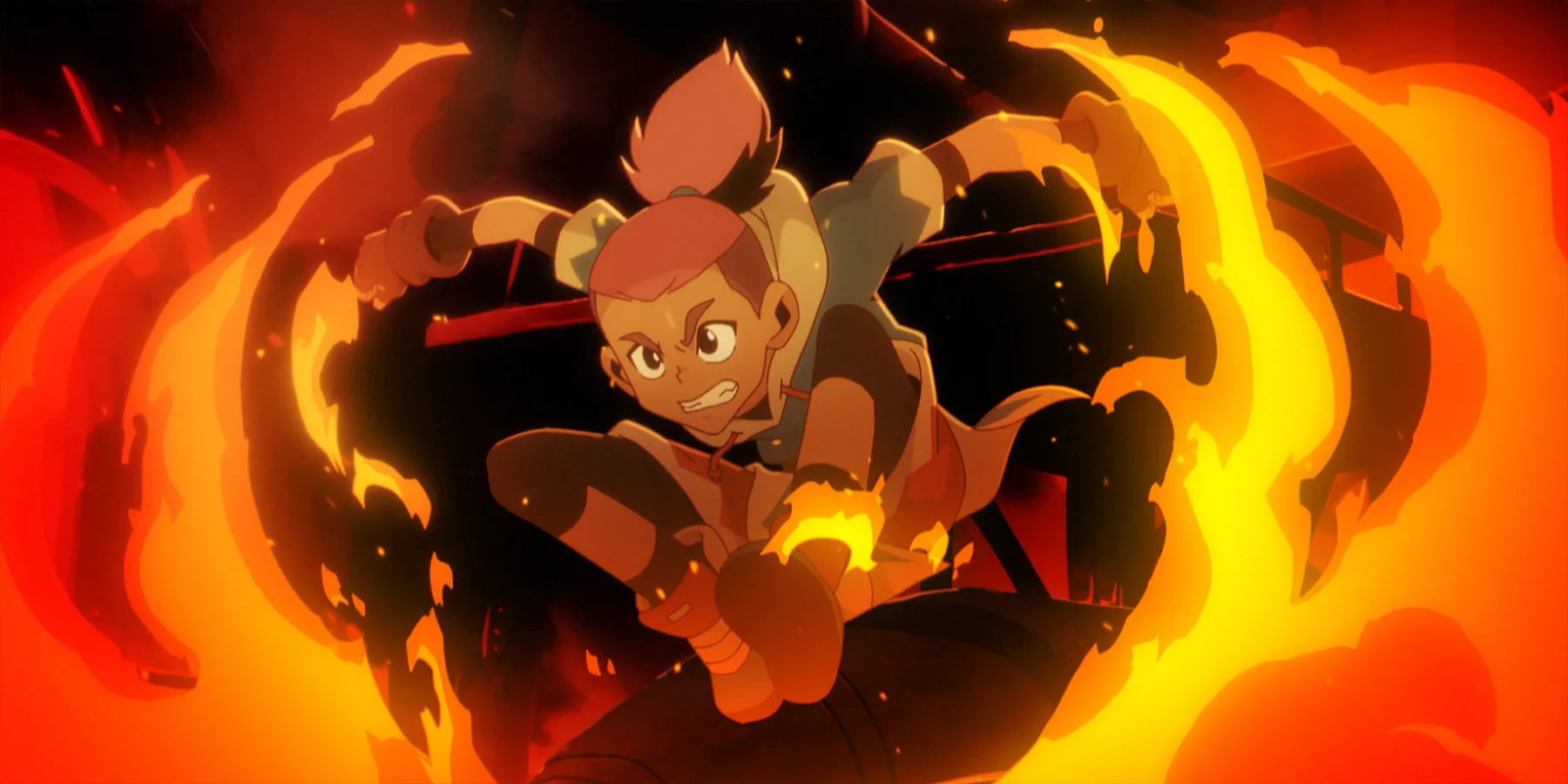
With the global excitement of the World Cup keeping sports anime in the cultural spotlight, fans frequently debate the merits of modern favorites like Haikyuu!! and Blue Lock. Concurrently, fantasy masterworks like Frieren: Beyond Journey’s End and Delicious in Dungeon have come to define the current generation. Yet, successfully fusing sports and fantasy into a single narrative is a rare feat, a challenge eagerly embraced by the creators of Disney’s series, Dragon Striker.
Built around the high-octane fictional sport of Gorotama, where players utilize magical abilities known as tama to score goals, the show pairs fast-paced matches with a deeply emotional, coming-of-age story. In a recent interview with Temple of Geek, co-creators Sylvain Dos Santos (executive producer) and Charles Lefebvre (director) opened up about how their own passions shaped the series, and why creating an animated show is the ultimate team sport.
The Ultimate Team Sport: Animation Behind the Scenes
When praised for the incredible quality of the show, Sylvain Dos Santos was quick to pass the credit to the entire studio. In the interview, Dos Santos explained that animation is really a team sport. He noted that it takes a whole team, and because they are super proud of everyone at the studio, they always share the compliments.
This collaborative ethos is woven tightly into the fabric of the show’s world-building. Director Charles Lefebvre noted that the production office was constantly buzzing with collective energy, with staff members plastering the walls with post-it notes as they threw themselves into fleshing out the lore. The creators established a rich baseline for the universe so that the entire team could actively play, explore, and inject their own passion into the setting, creating an environment that feels alive beyond the edges of the screen.
Dragon Striker Characters and Powers From the Inside Out
The series follows Key, a farm boy whose extraordinary talent lands him at Kal Asterock, an elite academy for gifted athletes. Alongside a memorable supporting cast including Ssyelle, Milo, Odward, and Ameline, Key must navigate both intense athletic competition and emerging magical dangers. When asked whether a character’s personality or their magical field ability came first during development, Dos Santos revealed that it was a bit of a mix, but most of the time they started with the character and built the tama around them. The team focused heavily on crafting intricate backstories before assigning powers.

Unlike shows where magical attacks are purely cosmetic or unseen by the characters themselves, the powers in Dragon Striker are fully visible and mechanically vital. They are seamlessly woven into teamwork, defensive strategies, and scoring opportunities. The narrative heavily rewards this creative strategy, as seen with a character who is an amputee. She utilizes her ice-based tama to adapt, excel, and elevate her game on the field, proving that her disability is no barrier to competing at the highest level.
A Convergence of Iconic Influences
The creators also highlight the vibrant tapestry of nostalgic and modern influences that helped bridge the gap between classic sports anime and massive Japanese role-playing games. On the athletic side, classic series like Captain Tsubasa and Inazuma Eleven heavily inspired the colorful, spectacular, and high-energy combo attacks, such as fire and ice, seen on the field. Meanwhile, the competitive intensity associated with Blue Lock shines through during the matches.
For the environment and lore, Lefebvre drew heavily from his love for Japanese RPGs like Chrono Trigger, Secret of Mana, and Monster Hunter. These games inspired him to build a massive, immersive world that exists outside the immediate frame of the story, allowing characters to genuinely interact with their surroundings. Additionally, viewers can spot elements of Avatar: The Last Airbender in the show’s humor and magic, alongside world-building echoes from Frieren: Beyond Journey’s End.
Manipulating Emotion Through Sound
A major pillar of the show’s cinematic identity is its sweeping orchestral score, composed by Kevin Penkin and recorded in Japan with an 80-piece orchestra. For Lefebvre, music is not just a background element; it is the beating heart of the production. Lefebvre admitted that the music represents about 60% of the final result. He noted that sound is stronger than the image because it can bring the audience to feel emotions before they even realize it, essentially allowing the creators to manipulate emotions through the score.

Lefebvre recalled that from the very first track Penkin sent over, the entire office was hooked, listening to it on loop while animating. Having a masterpiece soundtrack allowed the team to channel the epic, “shonen” feeling they always loved when watching classic anime. This musical craftsmanship ultimately elevated the show’s quieter character beats and high-stakes matches into a polished, cinematic experience.
Disney’s Dragon Striker is a Fresh Venture Worth Watching
By treating the production process with the same level of trust, strategy, and synergy required of a championship soccer team, the creators of Dragon Striker have built something genuinely unique. Melding stunning visual effects, an elite orchestral score, and deep character-driven storytelling, the series stands as a testament to what can be achieved when a creative team operates in perfect harmony. For fans looking for a fresh, action-packed spectacle ahead of the World Cup, Dragon Striker hits the back of the net.



4 thoughts on “Creators Sylvain Dos Santos and Charles Lefebvre on Disney’s Dragon Striker”