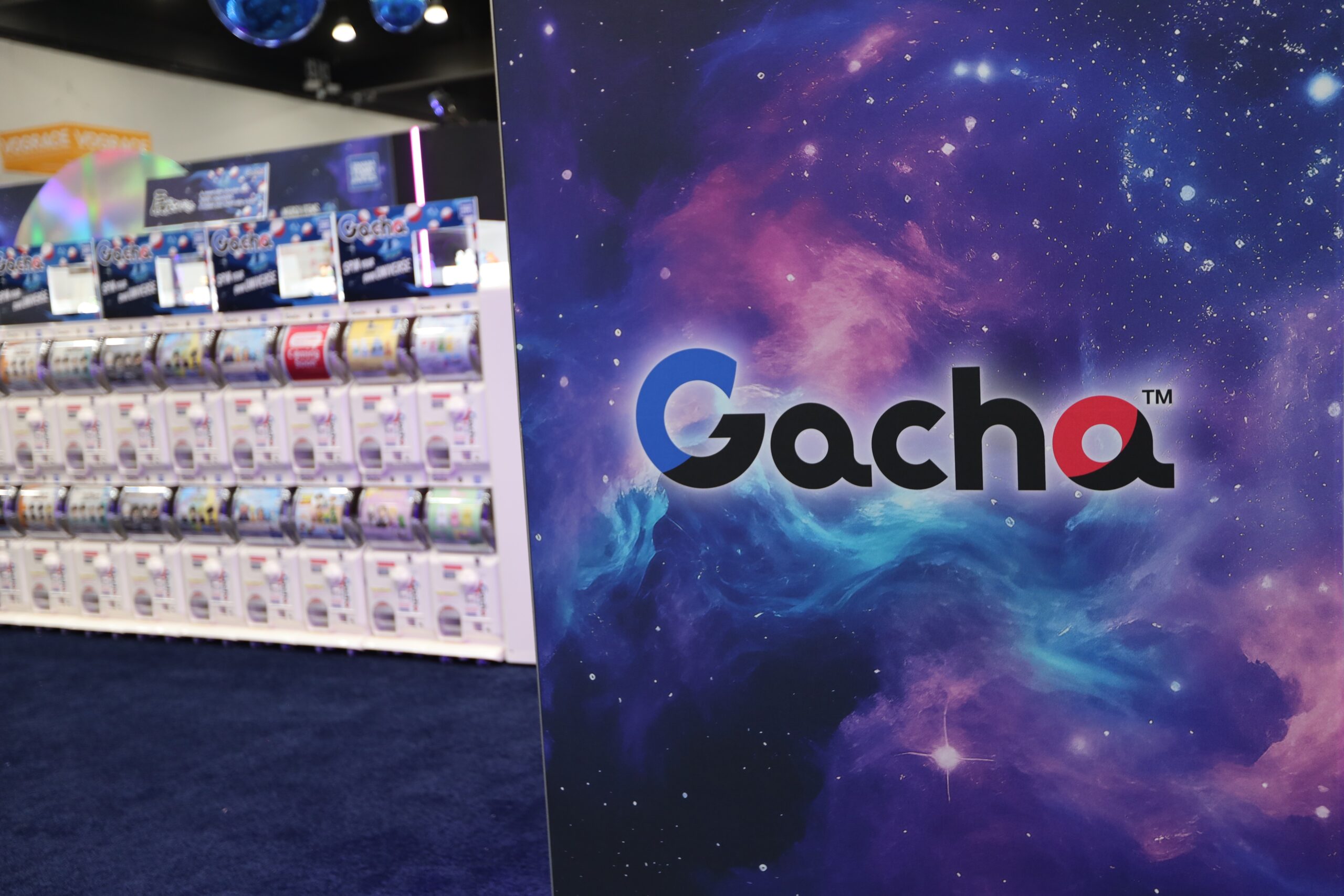
Long before modern mystery box sensations like POP MART and Labubu dominated global headlines, there was Gacha, the original capsule toy phenomenon that has captivated collectors for over six decades. Originating in Japan and steadily expanding its cultural footprint worldwide, Gacha has become a cornerstone of the “Kidult” lifestyle in the United States, blending cute, cool, and outright bizarre designs into a tactile, high-engagement retail experience.
Following a wildly successful showcase at Anime Expo 2026 with their immersive “Gacha Galaxy” experience, Toshihisa Kondo, President and CEO of T-ARTS Company Ltd., sat down with Temple of Geek. Having spent 20 years in the toy business, Kondo shared insights into Gacha’s rich history, its evolution in the U.S. market since 1965, the psychology of the mystery box, and the unique dopamine rush of turning the crank.
From Simple Toys to “Asobi”
When capsule toys first arrived in Japan roughly 61 years ago, the core appeal was straightforward: the simple convenience of picking up a small toy. Today, Kondo notes that the industry has transformed into “Asobi”—an interactive experience encompassing character IP, original in-house concepts, sophisticated sculpting, and high collectibility. Despite these modern advancements, the fundamental magic has remained unchanged. As Toshihisa Kondo explains, what has not changed across eras or markets is the anticipation of turning the crank and opening the capsule, with people choosing Gacha because they enjoy the chance encounter itself.
“We believe the fundamental reason people choose Gacha is that they enjoy not just the product but the chance encounter itself. T-ARTS’ Gacha lets you savor that Asobi to the full, and by delivering that heart-racing sense of excitement and anticipation to people overseas as well as in Japan, it has been embraced by a great many fans.”
Anime Expo 2026 “Gacha Galaxy” experience
Laying the Foundation for the Mystery Box Craze
As the pioneer of the capsule format, Gacha established the original consumer-engagement loop that underpins today’s massive mystery box market. Unlike traditional retail, where shoppers browse and select an exact item, Gacha builds a connected journey involving the anticipation of the unknown, the tactile discovery when the capsule lands in your hand, and the joy of collecting. Kondo emphasizes that while randomness is a key component, it is paired with accessible sizing, affordable price points, and meticulous design quality. Together, these elements cement T-ARTS’ role as the foundational blueprint for modern surprise-toy trends.
Toshihisa Kondo, President and CEO of T-ARTS Company Ltd.
“What makes Gacha distinctive is that an accessible size and price, planning that draws out the appeal of a character or motif, high quality, and the experience of turning the crank and opening the capsule all come together as one. Because of these elements, we think it is no exaggeration to say that T-ARTS’ Gacha laid the foundation for the mystery box trend now popular around the world.”
Four Defining Eras of the Capsule Toy Industry
Reflecting on his two decades in the business, Kondo highlights four major turning points that shaped modern capsule toys. The first turning point was the shift from unpainted figures to fully painted pieces, which brought a wave of new fans and drew widespread public attention. The second was the rise of the adult fan base, as generations who grew up buying capsule toys became parents and began collecting out of nostalgia or sharing the experience with their children. The third was the expansion to large dedicated sales floors featuring hundreds of machines in a single location, making it easy for consumers to find them anywhere. The fourth is the current “oshikatsu” boom in Japan, where fans actively support the characters and creators they love, transforming capsule toys from impulse add-ons into primary destination purchases.
“Japan is in the middle of an “oshikatsu” boom — fans actively supporting the characters and creators they love — and capsule toys are drawing even more attention as a result. Because of this, capsule toys have shifted from an add-on purchase to a purchase people set out to make, and many consumers now come to the sales floor specifically for capsule toys.”
The Analog Revival in a Digital World
In an era dominated by friction-free digital entertainment, the physical ritual of Gacha offers a refreshing contrast. Inserting a coin, feeling the resistance of the metal handle, hearing the capsule drop, and unboxing the prize creates a multi-sensory story within seconds. Rather than viewing physical toys and digital platforms as opposing forces, Kondo sees Gacha as part of a contemporary cycle where tangible, hands-on encounters naturally inspire fans to share their discoveries through photos and videos on social media. This dynamic was on full display at Anime Expo 2026, where the “Gacha Galaxy” pop-up allowed visitors to physically step inside the world of Gacha, driving massive engagement and peer-to-peer sharing.
“Gacha holds several senses and a small story within a very short span of time. That sequence of actions — one that is not driven by efficiency alone — creates anticipation and memory, and becomes an experience you cannot get from simply receiving a product. On top of that, being able to show your result to the family or friends beside you creates real, face-to-face communication, which we see as another one of Gacha’s strengths. T-ARTS’ Gacha has all of this in full measure, and it delivers that sense of excitement and anticipation to a great many people, overseas as well as in Japan.”
Balancing Strategy, Pricing, and Collector Psychology
Anime Expo 2026 “Gacha Galaxy” Experience
When asked about the psychology behind repeat purchases and completionist collectors, Kondo points to rich worldbuilding and diverse product lineups. However, T-ARTS intentionally designs series to avoid unhealthy, gambling-like loops. Kondo notes that whatever comes out should feel worthwhile, where one on its own should be enjoyable and collecting several should open the world up further within reasonable limits. This philosophy extends to pricing strategy, where T-ARTS evaluates local market environments, sculpting costs, and materials rather than relying on simple currency conversions to ensure consumers feel they have received exceptional value for what they paid.
“In the U.S., it is not only popular IP products that have been embraced — our own designs and original in-house concepts have found an audience as well, and we are seeing broad demand that includes the kidult segment. In Japan, specialty shops and large dedicated floors have become part of everyday life, and the habit of continually looking out for new releases is well established. In North America, we see many cases where people first experience Gacha and then share the result with friends or on social media, and that leads to the next purchase. The Gacha environment in Japan and the U.S. is different today, but I believe some of the drivers of repeat purchase in the U.S. may be the same as in Japan, so we want to keep communicating the appeal of T-ARTS’ Gacha to people across the U.S.”
The Next Frontier in the West
As T-ARTS looks to the future, the goal is not merely to export Japanese culture, but to help Gacha take root organically in Western daily life. By combining globally beloved character IP with unique in-house concepts tailored to local tastes, T-ARTS aims to deliver the unmistakable thrill of the crank to an ever-growing community of international fans.
“Our next challenge is not simply to export Gacha as Japanese culture, but to root it as a culture people can keep enjoying within their own daily lives. Going forward we will strengthen both our work with globally supported IP and the original concepts only T-ARTS can create, and build sales floors and experiences suited to local tastes and to the way people move through their day. While cherishing the Gacha culture that evolved in its own way in Japan, T-ARTS intends to work confidently with local partners and fans in Western markets to grow a Gacha culture native to each region, and to deliver that sense of excitement and anticipation to as many people as possible.”
Born and raised under the California sun. Monica is the Editor-In-Chief at Temple of Geek. She also serves as Executive Producer of The Temple of Geek Podcast, Retro Rebel Podcast, and Portrait of a Fangirl. Lover of all things geeks but especially sci-fi like Doctor Who, The Expanse, Star Wars and Star Trek.