
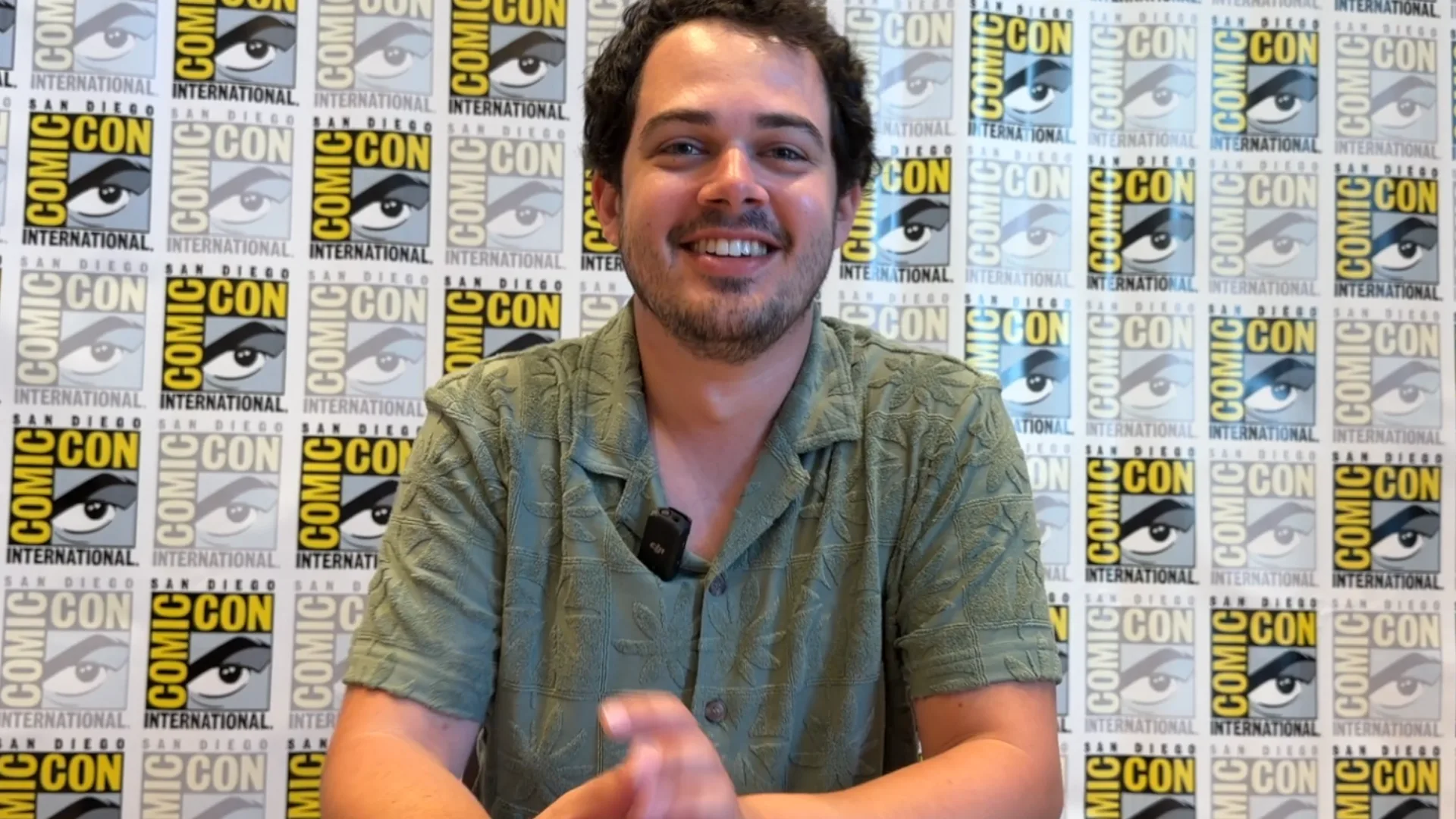
At San Diego Comic-Con’s 12th Annual Musical Anatomy of a Superhero and Other Heroes Panel, Emmy Award-winning composer Mick Giacchino took center stage to discuss his work on Marvel Television’s highly anticipated Disney+ series VisionQuest.
Moderated by his father, Oscar-winning composer Michael Giacchino (Spider-Man: Brand New Day), the panel brought together a powerhouse group of Hollywood talent. Joining Mick were composers Kris Bowers and Michael Dean Parsons (Spider-Noir), Claudia Sarne (Supergirl), and Brian Tyler (The Super Mario Galaxy Movie) to break down the process behind crafting theme music for modern genre storytelling.

The Tone of VisionQuest: Sci-Fi, Mystery, and Family Therapy
Following the panel, Mick Giacchino spoke with journalists during a press conference to dive deeper into his creative process, the sonic direction of VisionQuest, and how he approaches scoring iconic characters.
When asked about how he tackled the return of characters like White Vision and Ultron, Giacchino emphasized that VisionQuest diverges from standard superhero conventions, describing the narrative dynamic as centered heavily on “family therapy” and psychological mystery.
Mick Giacchino: “The show is really kind of just family therapy… We definitely branch off from there as well, but you should expect to hear a few familiar themes. It’s really just ultimately about what the show itself needs. And there are a couple moments here and there where it needed a little bit of WandaVision, a couple moments here and there where it needed a little bit of Agatha. It’s really case by case.”
He noted that showrunner Terry Matalas was cautious about leaning too hard into traditional superhero fanfare. “Terry was weary about making it sound too much like a superhero thing at times because, again, it’s really family therapy and it’s about… it’s also very much a sci-fi story as well. So there’s mystery, and that kind of informed [the score].”
Balancing the Synthetic and the Organic
A core focus of Giacchino’s work on VisionQuest involves reflecting the internal conflict of the Synthazoid. And capturing the line between human emotion and artificial construction. He detailed his experiment with using the human voice alongside heavily processed organic instruments to craft this specific soundscape.
Journalist: “I was very interested in what you said about bringing voice in for the first time, and I would like to hear more about how you use voice as an instrument…”
Mick Giacchino: “It just kind of gave a really nice warmth to the strings and filled out the sound a little bit, but then there’s also times where vocals are leading with melodies… There’s one character who has a theme that’s more based around vocals at times and then it transitions into the orchestra and sometimes on synth—it really depends on the context, but yeah, it was fun.”
He elaborated further on bridging organic elements with synthetic manipulation:
Mick Giacchino: “I wanted to make sure that there is an organic element to this as well because [of] just the nature of how he was built… So I would do those in the demos and then we would go record at the orchestra. I would make sure we isolated the woodwinds so that we could run and process them through this pedal. So there’s kind of an organic quality, but then also a synthetic repurposing of this organic material.”
When asked about his approach to handling contrasting character motifs, such as Vision and Ultron, he explained how flexibility in orchestration helps mirror character development:
Nick Williams: “So you mentioned in VisionQuest we have both Vision and Ultron. How did you approach each of their themes, and how are they either similar or different?”
Mick Giacchino: “There are times where it can be more operatic; there are times where it can be just small and intimate and interlocked with some other character themes as well… I always like to try my best to use character themes in different ways so that they can reflect the emotional parts of the character.”
Reflections on Past Projects: The Penguin and Skeleton Crew
During the session, Giacchino also reflected on the creative constraints and choices that defined his acclaimed scores for HBO’s The Penguin and Disney+’s Star Wars: Skeleton Crew.
Scoring The Penguin with String Quartets: “We’re not gonna have the full brass. We’re gonna have to rely on strings. And when I was kind of making my playlist for just in terms of inspiration, one of the things I was listening to was “Psycho“… and that score, only strings. Batman’s very grand and kind of big, and the Penguin was more intimate… String quartets are usually associated with high class, but I wanted to kind of dirty it up a little bit and make it a little bit frenetic… reflect that he’s thinking on his feet and making impulsive decisions.”
Overcoming the Pressure of Star Wars: Skeleton Crew: “At the beginning I was like, I’m so overwhelmed. This is Star Wars. This is like, creme de la creme of film scores. Like, how do I do anything with this? … We can lean into the Star Wars thing at some times, but it’s really more this other story that will take you off on an adventure.”
Modern Scoring Workflows and Creative Collaboration
Addressing a question from a journalist regarding the modern composing workflow compared to traditional sheet writing, Giacchino discussed how technology shapes studio expectations today. “Definitely people like to see a lot more how it’s gonna work with the picture… You have to lock everything up these days. And editing-wise, it’s so much easier to be just moving stuff around… There are a few ostinatos that the showrunner really fell in love with that over the course of the show became their own motifs and themes.”
He closed the conversation with a lighthearted story about sharing early track ideas with his father, Michael Giacchino. “Sometimes every now and then I’ll send him something to be like, ‘Hey, do you have any thoughts?’ He was like, ‘Take that guitar thing out.’ And I was like, ‘I like it, I’m gonna keep it.’ And then when I showed it to the director, he was like, ‘I love this!’ So I was like, ‘Yeah!'”
Also Happening at SDCC 2026
Paramount+ Steals the Show as SDCC 2026 Kicks Off
Hasbro Kicks Off SDCC with Exclusive First Look at Magic: The Gathering and Star Trek Collab
Hasbro’s Legend of Zelda: Heroes of Hyrule Collection Sneak Peek at SDCC 2026
We Played Nintendo Switch Sports Resort at SDCC
Wētā Workshop Unveils Exclusive Master Jeweller’s Collection at SDCC 2026 Preview Night
San Diego Comic-Con Kicks Off With Preview Night as Adult Swim Brings “Party on The Green”
Peanuts at SDCC 2026 with Exclusive Merch and Pop-Up Experiences


One thought on “Mick Giacchino on the Complexities of Superhero Scoring | SDCC 2026”